Skin Allergy Symptoms and Their Causes
Why your skin reacts differently to allergens, and what that tells you.
The immune system's job is threat detection, and it is extraordinarily good at that job. The problem, in allergy, is false positives.
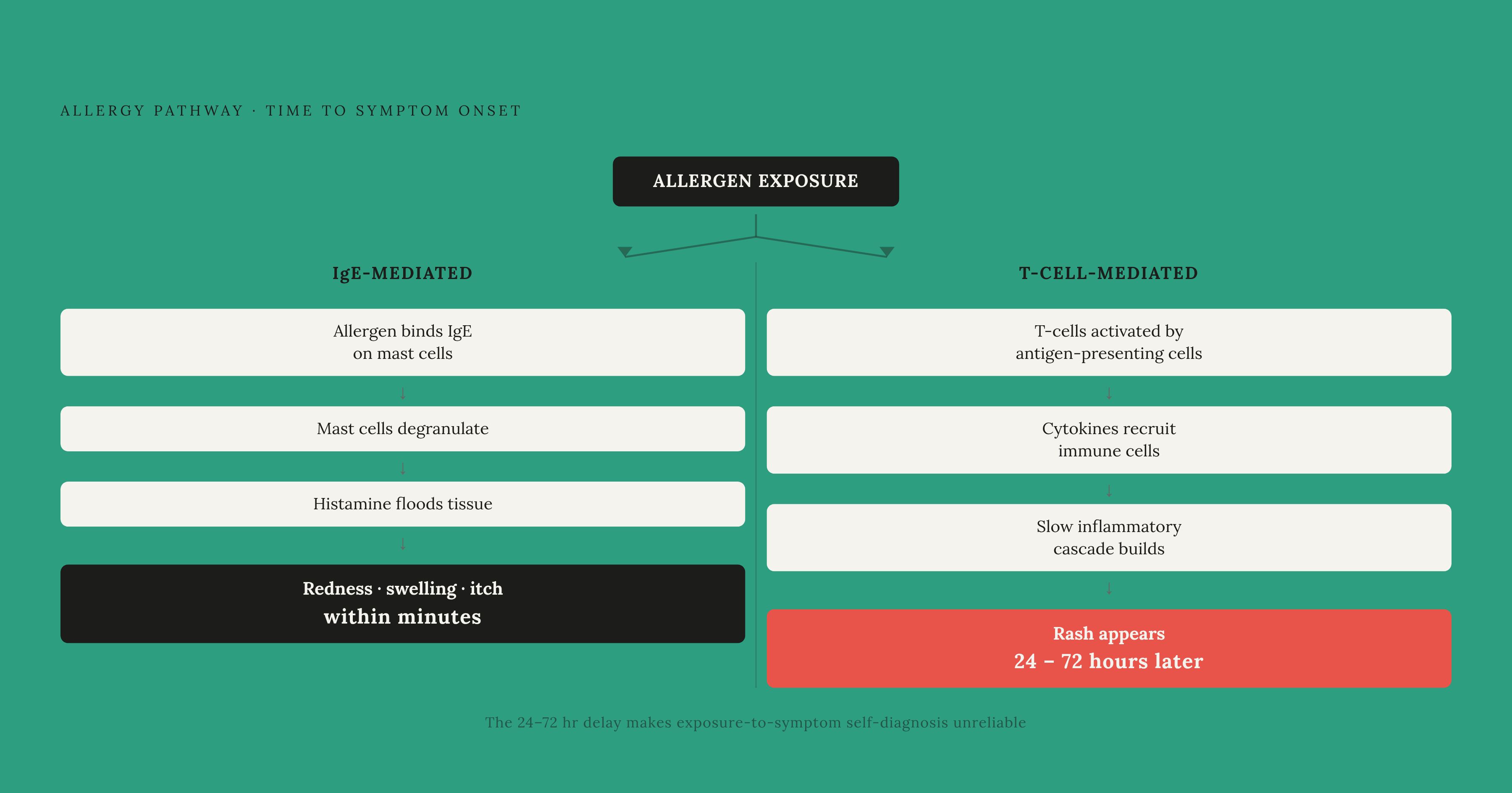
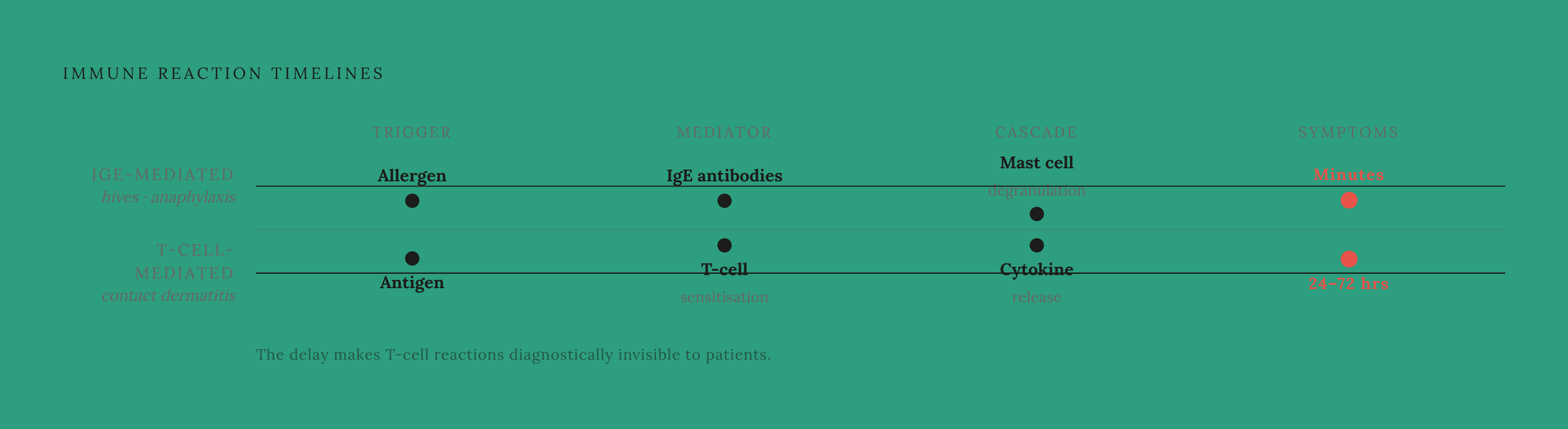
The difference comes down to which arm of the immune system is doing the work. Food allergies and most drug reactions operate through IgE antibodies attached to mast cells: when the allergen arrives, those mast cells degranulate within minutes, flooding tissue with histamine and producing hives almost immediately. Contact dermatitis from a watch, a belt buckle, or a fragrance operates through T-cells instead, a slower mechanism in which the inflammatory process takes 24 to 72 hours to fully develop after exposure. Both reactions require prior sensitization, meaning the first encounter with the substance primed the immune system silently and the visible response only appears on re-exposure. The practical consequence is that the watch rash appearing on Wednesday traces back to Monday's exposure, not to anything that happened that morning, which is what makes self-diagnosis of contact reactions so reliably difficult.
When the immune system first encounters a substance it decides is dangerous, whether pollen, a food protein, or the nickel in a piece of jewelry, it builds antibodies against it. Specifically, it produces IgE antibodies, which then attach to mast cells, sentinel cells distributed throughout the body's tissues, with particularly high concentrations in the skin, lungs, and gut.
Nothing has happened yet. This first encounter is sensitization. The body has filed a threat report and armed itself. You will feel nothing.
On re-exposure, the incoming allergen binds to those IgE antibodies sitting on the mast cells, and the mast cells respond by degranulating: they rupture and flood the surrounding tissue with histamine and other inflammatory mediators. Histamine dilates blood vessels, increases their permeability, and sensitizes nearby nerve endings. The result at the skin's surface is redness, swelling, itch, and warmth, unfolding within minutes.
That's the IgE-mediated arm of the immune response. Fast, dramatic, diagnostically legible. But there's a second arm entirely, one that produces a completely different symptom timeline. In T-cell-mediated reactions, the response is slower, orchestrated by immune cells rather than antibodies. The inflammatory process takes 24 to 72 hours to fully develop after exposure. Contact dermatitis is the classic example.
This distinction isn't academic. It predicts the symptom pattern, which predicts how hard it will be to trace the cause. Hives appearing twenty minutes after eating shrimp are easy to read. A rash appearing two days after wearing a new watch is not. Same immune system, different mechanism, completely different investigative problem. That raises an important question: if the same immune system can produce such different timelines, how confident can anyone be that they've correctly identified their own trigger?
Hives: What They Look Like, What Sets Them Off, and When They Signal Something Systemic
Hives, clinically termed urticaria, have a fairly recognizable presentation: raised welts, red or skin-colored, with a flare of redness at the margins, intensely itchy. Individual lesions typically resolve within 24 hours, but in an active episode, new welts form as old ones fade, which makes the condition feel continuous even when the biology is cycling.
Acute hives come on fast, usually within minutes to a couple of hours after exposure. Foods are common culprits: peanuts, shellfish, tree nuts, eggs. Medications are another frequent driver, as are insect stings and latex. Because the mechanism is IgE-mediated, sensitization has to have occurred on a prior exposure. The severe reaction is a re-encounter, not a first one.
Chronic urticaria is a different situation, though not always different in appearance. By definition it's hives persisting for more than six weeks. In many of these cases, no specific external trigger is ever found. There is often an autoimmune component, the immune system reacting against its own tissue, and management becomes considerably more complex as a result.
What demands attention is when hives appear alongside other symptoms. Hives can be the skin's first visible sign of anaphylaxis, a systemic allergic reaction involving multiple organ systems simultaneously. Throat tightness, difficulty breathing, dizziness, a sudden drop in blood pressure: these alongside hives constitute a medical emergency. The skin signal is the warning; the systemic response is the danger.
For anyone experiencing recurrent unexplained hives, one of the most useful things to do before a clinical visit is keep a log. When do they appear? What was consumed or touched in the two hours prior? How long do individual welts last? That granular record cuts through diagnostic noise and gives a clinician something concrete to work with, rather than a month of vague recollections.
Eczema: The Chronic, Relapsing Condition Most People Are Told to Just Manage
Eczema, or atopic dermatitis, operates differently from hives in almost every dimension: its timeline, its mechanism, its trajectory through a person's life.
The defining features are a disrupted skin barrier, immune dysregulation, and a pattern of flares and remission that can continue for years or decades. Affected skin is intensely itchy, dry, thickened, or scaly. In infants, patches often appear on the cheeks and scalp. In older children and adults, the classic sites are the flexural creases, inside the elbows, behind the knees.
I want to pause on the itch for a moment, because I think it gets underestimated in clinical descriptions. The instruction to "just manage it" is a different thing to receive than it is to give. Nighttime itch in particular is relentless in a way that daytime descriptions don't quite capture. There's a reason eczema patients and parents of eczema patients frequently describe exhaustion as the dominant feature of the condition, more than the rash itself.
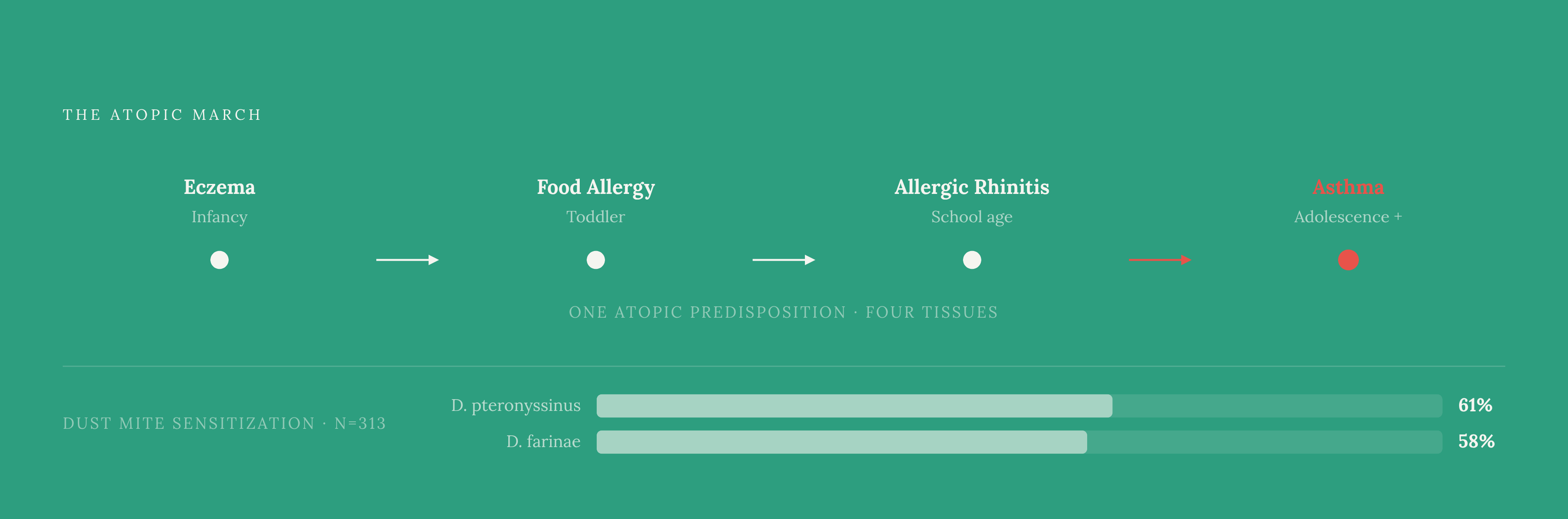
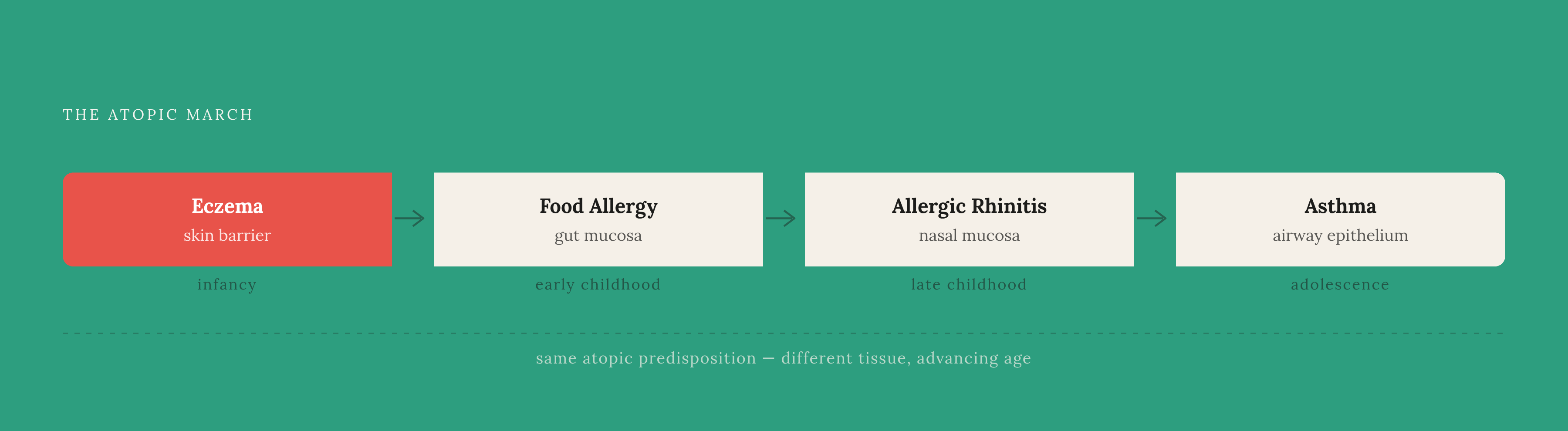
There's a pattern immunologists call the atopic march. Eczema appears first, often in infancy. Food allergies follow, then allergic rhinitis, then asthma. These aren't coincidental comorbidities. They reflect the same underlying atopic predisposition expressing itself through different tissues as the immune system matures and encounters new exposures. Eczema in a toddler is sometimes the opening chapter of a much longer allergic story, one that won't be recognized as a story until years later. It is also worth considering what that means for how early intervention should be timed — and whether waiting for the march to unfold is the right clinical posture.
Patients rarely hear the distinction between triggers and causes explained clearly. Sweat, wool, certain soaps, dust mites, dry air: these are triggers. They provoke flares. They are not why the condition exists. The root is immune dysregulation, a system calibrated too sensitively. National data consistently identifies dust mites as the highest-prevalence environmental allergen, and in a pediatric study of 313 children, sensitization rates to specific dust mite species reached 61% and 58%, respectively. That isn't a background variable; it's the most clinically relevant environmental driver of eczema flares in a significant portion of patients.
Topical steroids reduce inflammation. Moisturizers support barrier function. Antihistamines suppress the itch reflex. All of these work in the sense that they make a current flare more bearable. None of them alter the immune sensitization that will drive the next one.
Why Does a Rash From a New Watch Show Up Days Later When Hives From Food Appear Within Minutes?
Most people, when they develop a rash from touching something, assume the substance irritated their skin. Sometimes that's correct. Often it isn't, and the difference matters more than most people realize.
Irritant contact dermatitis is direct chemical damage to the skin barrier, no immune involvement required. Detergents, solvents, prolonged water exposure can strip the barrier mechanically. The damage is proportional to exposure and doesn't require prior sensitization. Anyone's skin can be irritated by sufficient contact with a sufficiently strong substance.
Allergic contact dermatitis requires the immune system's T-cell arm and, crucially, prior sensitization. The first time you encounter urushiol, the compound in poison ivy, nothing happens at the contact site, or the reaction is mild enough to dismiss. On re-exposure, the immune system recognizes the substance, and the inflammatory response develops over 24 to 72 hours. The rash does not appear immediately.
That delay is the core diagnostic trap. The rash appearing on a Wednesday traces back to the nickel-buckled belt worn on Monday, the fragrance in a lotion applied Tuesday morning, a rubber compound in equipment handled the week before. This is not a reasoning failure on the patient's part. It is a feature of the biology, and it makes intuitive self-diagnosis essentially impossible. But what if you knew that delay was coming — would you think to look two days back rather than two minutes?
The diagnostic gold standard is patch testing: suspect allergens applied under occlusion and read after 48 to 96 hours to capture the delayed hypersensitivity response. It requires a clinician with a comprehensive allergen panel, and the breadth of the panel matters. A narrow one misses allergens not included, regardless of how carefully it's applied.
What patch testing produces, though, is specific. Once you know it's nickel, or a particular preservative, or a specific fragrance compound, avoidance becomes achievable. A belt buckle or a cosmetic ingredient is something you can actually eliminate from your life, which is not something you can say about dust mites or pollen. That specificity makes allergic contact dermatitis one of the more tractable skin allergy diagnoses, provided you get the right test.
Why Skin Allergy Symptoms Are So Often Attributed to the Wrong Cause
Itch, redness, and rash are nonspecific. They're symptoms shared by infections, psoriasis, rosacea, drug reactions, stress responses, and a long list of other conditions. Without a thorough clinical history, allergic origin is easy to overlook and easier still to misattribute.
The delayed-reaction problem compounds this considerably. The T-cell-mediated timeline of allergic contact dermatitis breaks the intuitive cause-and-effect link most people rely on to self-diagnose. But even IgE-mediated conditions can be harder to trace than they appear; a food protein can persist in a shared kitchen environment, and aeroallergens don't announce their arrival.
Seasonal variation introduces its own noise. Eczema and hives that reliably worsen in spring are frequently attributed to stress or dietary changes by patients who were never told that pollen exposure can elevate the systemic inflammatory baseline, making skin more reactive to everything else. Tree pollen sensitization in children rose from 4.7% to 25.3% between 2011 and 2024 in one pediatric cohort study. Clinical and public awareness has not caught up to that shift.
Then there's the over-the-counter reflex. A tube of hydrocortisone and a box of antihistamines are accessible, affordable, and effective enough to suppress visible symptoms within a day or two. The rash clears. The connection to an allergen is never made. This cycle repeats for months or years, each iteration reinforcing the conclusion that no further investigation is necessary.
Cumulative sensitization makes this worse in a specific way. A patient sensitized to multiple allergens simultaneously finds that eliminating any single suspected trigger produces no discernible improvement, which reinforces the conclusion that "it's probably not allergies." Meanwhile, several triggers are active concurrently, and no single avoidance measure is adequate to clear the threshold. The logic of the experiment is undermined by the complexity of the exposure. One might argue that self-investigation, in that scenario, is working against itself before it even gets started — and that this is precisely the point where a structured clinical workup becomes not optional but necessary.
How Skin Allergy Symptoms Connect to Whole-Body Effects People Rarely Trace Back to Allergy
A useful thing to understand about atopic conditions is that they do not respect organ boundaries.
Atopic dermatitis, allergic rhinitis, and asthma share the same underlying inflammatory pathway. They are different expressions of the same immune dysregulation, often coexisting in the same patient and frequently cycling in intensity together. The skin is one expression of a systemic immune state. When that state is dysregulated, the effects are not confined to any single tissue.
The itch-sleep disruption cycle is a good place to make this concrete. Nocturnal itch in eczema fragments sleep. Fragmented sleep raises circulating inflammatory cytokines. Elevated cytokines worsen skin barrier function. Degraded barrier function makes the surface more reactive to triggers, which increases itch, which disrupts the next night of sleep. This is a physiologically documented cycle, not a metaphor, and it's why many eczema patients feel perpetually behind on rest even when their visible symptoms look moderate to an outside observer.
Cognitive effects follow from there. Histamine plays a central role in regulating alertness and sleep-wake cycles, and allergic inflammation disrupts that regulation. The brain's oxygen demand is disproportionately large relative to its mass, so even modest disruptions to sleep quality produce noticeable effects on focus, clarity, and mood. The "brain fog" chronic allergy patients describe is not imagined. It is part of the same systemic process.
What most patients are never told is this: if you are simultaneously managing chronic itch, poor sleep, cognitive fatigue, and low mood, these are not necessarily four separate problems requiring four separate interventions. They share a common allergic root. Four separate problems suggest four separate doctors, four separate prescriptions, four separate explanations. One root cause suggests a very different starting point. Why exactly does this matter? Because the treatment path changes entirely depending on whether you're looking at one problem or four.
What an Accurate Skin Allergy Diagnosis Actually Involves
Testing does not begin with a test. It begins with a history.
The timing of symptom onset, the pattern of flares, occupational and home exposures, family history of atopy: this information provides context that no lab result can replicate. A positive test result against a background of no matching symptoms is not a diagnosis. Sensitization exists on a spectrum, and clinical correlation is what converts a test result into an actionable finding. A clinician who skips the history is working with significantly less than half the available information.
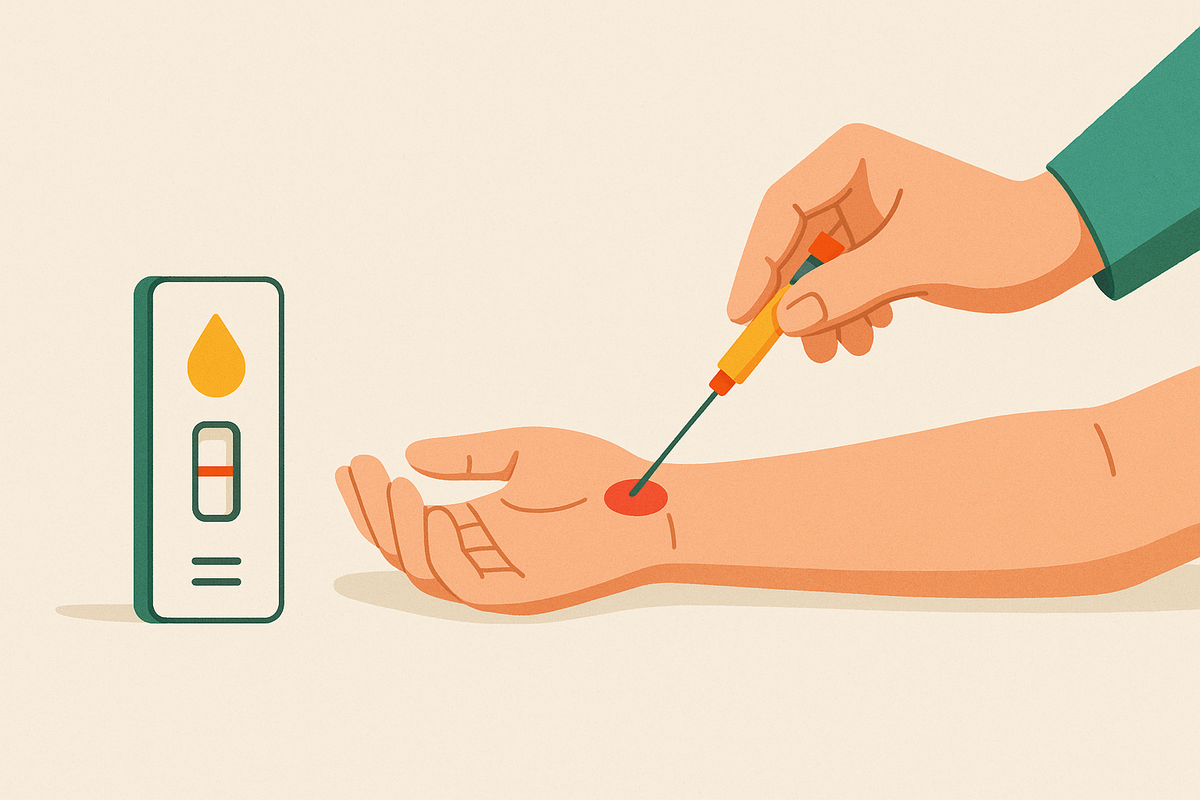
For conditions like hives and environmentally driven eczema, IgE-based testing is appropriate. Skin prick tests introduce small amounts of allergen extracts to the skin's surface and observe for a localized wheal-and-flare response within twenty minutes. Specific IgE blood tests identify circulating antibodies to specific allergens from a blood draw. Both approaches are useful for identifying sensitization to aeroallergens and food allergens.
For allergic contact dermatitis, neither of these will do. Patch testing is the specific and irreplaceable tool: suspect allergens applied under occlusion to the upper back, left for 48 hours, then read at 72 to 96 hours to capture the delayed hypersensitivity response.
At-home allergy testing options, typically finger-prick IgE blood tests, have become increasingly accessible and can identify environmental sensitization with reasonable accuracy. The important constraint is interpretation. A result sheet listing sensitizations is not a treatment plan. Which findings are clinically meaningful versus incidental requires a physician's judgment and, ideally, a detailed history to match against.
The practical reality is that most people with skin allergy symptoms never reach formal testing at all. CDC 2024 data identifies 7.7% of adults with a diagnosed eczema label, while lifetime prevalence figures in children reach 15 to 30%. The gap between those numbers represents a substantial population managing a condition whose cause has never been systematically investigated, treating the output and leaving the source untouched.
Why Treating Only the Skin Surface Leaves the Underlying Allergy Intact
Topical corticosteroids suppress local inflammation. Emollients support barrier function and reduce transepidermal water loss. Calcineurin inhibitors modulate the immune response at the skin-surface level. All of these are legitimate tools, and in the context of a flare, they are the right immediate intervention.
None of them alter what the immune system does the next time it encounters the allergen. The sensitization is unchanged. The response is waiting.
Antihistamines block histamine receptors downstream of the immune reaction. They are effective at suppressing itch and hive formation in the short term. They do not address the IgE antibodies or the mast cells primed to release histamine on the next exposure. The mechanism that generates the symptoms is fully intact.
Avoidance is more meaningful, particularly for allergic contact dermatitis where a specific substance can be identified and reliably eliminated. Avoidance of dust mites, mold, and pollen is a categorically different proposition. These are pervasive and, by most environmental measures, intensifying. Pollen seasons are extending. No practical level of household control brings exposure to zero.
What accumulates over time, without an intervention that recalibrates the immune response itself, is sensitization progression. The threshold for reaction lowers. Sensitization broadens across allergy seasons. Patients who managed adequately with over-the-counter remedies in their twenties often find those approaches increasingly insufficient by their thirties or forties. This trajectory is common enough to have a clinical name.
Allergies cost the U.S. an estimated $25 billion annually, the majority absorbed by ongoing symptom management rather than resolution. Symptom management is not the wrong choice when it's the only option on the table. But how does this affect our original promise of actually treating the condition? The question is whether most patients ever find out it isn't their only option.
How Allergen Immunotherapy Works to Address the Root Cause, and What Skin Allergy Patients Should Know About It
The World Allergy Organization describes allergen immunotherapy as the only treatment approach with the potential to modify the natural course of allergic disease. That's a careful and significant distinction from treatments that manage symptoms, and it's one that most allergy patients have never heard framed in those terms.
The process is a retraining of the immune system. Through repeated, gradually increasing exposure to the specific allergen driving a patient's immune response, immunotherapy shifts T-cell behavior from reactive to tolerogenic. Over time, the IgE-mediated response diminishes, mast cells become less primed, and the immune system develops a more appropriate non-response to the substance it previously identified as a threat. The underlying sensitization changes, which is a fundamentally different kind of intervention from blocking a receptor that sits downstream of the problem.
For skin allergy patients specifically, this matters because the skin is downstream of the immune response. Atopic dermatitis driven by dust mite or pollen sensitization is not primarily a skin disease; it is a systemic immune condition expressing itself through the skin. Clinical evidence indicates that immunotherapy targeting the relevant environmental allergens reduces flare frequency and severity in atopic dermatitis. The intervention is working at the level of the cause, not the expression.
Subcutaneous immunotherapy, the traditional allergy shot protocol, requires regular clinic visits for injections over a multi-year course. It has decades of clinical evidence behind it. The barrier for many patients is logistical: the sustained commitment of recurring clinic visits is one many people cannot realistically maintain.
Sublingual immunotherapy, where an allergen dissolves under the tongue and is absorbed through the oral mucosa, pursues the same immunological goal through a different delivery mechanism. Dendritic cells in the oral mucosa capture the allergen and interact with regulatory T-cells, initiating the tolerance-building process. Approved sublingual tablet formulations currently exist for grass pollen, ragweed, and house dust mites, and at-home dosing removes the clinic-visit barrier that ends many shot protocols before they reach clinical effect. A 2025 retrospective study of 103 children who completed a three-year sublingual immunotherapy course showed meaningful improvements in allergic symptoms that persisted after treatment was discontinued. Benefit that outlasts the treatment period is evidence of actual immune modification, not symptom suppression by another name.
Immunotherapy is a multi-year commitment and is not appropriate for every patient. The best candidates have identified environmental sensitization, inadequate symptom control through avoidance and medication, and symptoms that meaningfully affect quality of life. It is also less directly applicable to allergic contact dermatitis, where the relevant allergen is a specific contactant rather than an aeroallergen; for that population, patch-test-guided avoidance remains the primary tool, and for many patients it is sufficient.
For the substantial portion of people whose eczema, chronic hives, or allergic symptoms are driven by dust mites, pollen, or other environmental aeroallergens, though, there is a treatment that addresses the immune mechanism rather than its downstream consequences. Most of them simply don't know it exists. They are still on the cortisone-and-antihistamine loop, year after year, because the information isn't reaching them through the current standard of care. That gap, not the biology, is the part worth fixing.