Board-Certified Allergist Access Through Telehealth Allergy Platforms
Real allergists offer immunotherapy; most telehealth platforms offer symptom management.

Someone searches "allergy doctor online," clicks the first result that looks credible, and has a prescription on the way to a pharmacy. What that person often doesn't know is what kind of care they just received. Telehealth has opened the door to allergy treatment for tens of millions of Americans who deal with environmental allergies every year, one of the most common chronic conditions in the country, and also one of the most commonly under-managed. But the platforms behind that search result are not interchangeable. Some connect patients to board-certified allergists capable of building a full treatment plan. Others simply route a symptom questionnaire to a general practitioner who can authorize a refill. Both will feel, from the patient's side, like "seeing an allergist online." Only one of them actually is.
What Board Certification in Allergy Requires
Board certification from the American Board of Allergy and Immunology marks a specific, verifiable level of training that most general practitioners, internists, and even many telehealth platform physicians simply do not have, and that gap shapes what a clinician is equipped to diagnose, order, and prescribe. A board-certified allergist can distinguish IgE-mediated sensitization from a true clinical allergy, read skin prick tests and serum IgE panels with real nuance, and build a personalized immunotherapy plan instead of defaulting straight to symptom-management drugs. None of this means every allergy case needs that level of expertise. A patient with mild, seasonal grass pollen symptoms may do perfectly well with a primary care telehealth visit and an antihistamine. But a patient dealing with year-round symptoms, disrupted sleep, and asthma needs a specialist's judgment rather than a generalist's, because that choice shapes whether treatment actually works.
How untreated or under-treated allergy creates a cascade of downstream harm
If shallow allergy care only cost patients a little convenience, the distinction above wouldn't matter much. It matters because allergy left untreated, or treated only at the symptom level, has a way of quietly spreading into parts of life that have nothing to do with sneezing. Histamine isn't just the molecule behind itchy eyes. It also functions as a neurotransmitter that helps regulate alertness and sleep cycles, so when allergic inflammation throws off histamine balance and cytokine signaling, both energy and mental sharpness can suffer. Congestion tends to worsen at night, swollen nasal tissue restricts airflow, and that pushes people toward mouth breathing and fragmented sleep, which then undercuts memory consolidation and daytime concentration the next day. The "brain fog" that so many allergy sufferers describe arrives indirectly, through poor sleep, through the side effects of antihistamines, and through the metabolic toll of inflammation that doesn't let up, rather than as some direct allergic reaction in the brain itself. That distinction matters because it shows exactly where treatment can intervene: fix the sleep disruption, reduce the inflammation, and the downstream fog has a real chance of lifting. Antihistamines complicate this further. Their sedating side effects can stack on top of inflammation-driven fatigue rather than resolve it, leaving some patients tired for two reasons instead of one. A 2026 Frontiers in Allergy review backs up the broader pattern, noting that allergic rhinitis significantly impairs sleep quality, daytime functioning, school performance, and work productivity. None of this is rare or extreme. It is ordinary, compounding, and routinely blamed on something else.
Symptom management alone cannot resolve what is fundamentally an immune system problem
Antihistamines and nasal sprays are useful tools. They are not tools built to fix the underlying problem; patients who rely on them long-term tend to stay dependent on them long-term. Corticosteroid nasal sprays commonly cause nasal irritation, nosebleeds, headaches, and throat irritation, and while proper technique minimizes it, long-term use carries a rare risk of nasal septum perforation. These are reasonable tradeoffs for short-term relief, and they remain useful even alongside more advanced treatment. Allergen immunotherapy stands alone as the intervention capable of producing disease-modifying effects in IgE-mediated respiratory allergies, a fundamentally different aim than simply suppressing symptoms. A nasal spray relieves symptoms for as long as someone keeps using it. Immunotherapy, by contrast, can produce benefits that persist after treatment stops. That single difference draws the real line in allergy care: a clinician who can only prescribe symptom-management drugs is offering a narrower kind of care than one equipped to evaluate a patient for immunotherapy and design an actual desensitization plan.
What immunotherapy does to the immune system
Sublingual immunotherapy works by placing allergen extract under the tongue, where oral dendritic cells pick it up and, over repeated exposure, train the immune system toward tolerance instead of a defensive histamine reaction. At AAAAI 2026, Désirée Larenas-Linnemann, MD, described the effect of allergen immunotherapy as addressing an altered immune system and helping bring it "back on its track," and noted that SLIT tablets are now approved in the United States for allergic rhinitis and allergic conjunctivitis caused by grass pollen, ragweed, and house dust mite. That's a mechanistic claim, and the trial evidence behind it is substantial. A narrative review in Frontiers in Allergy points to robust randomized controlled trial evidence for clinically meaningful reductions in symptoms and medication use with grass and house dust mite SLIT tablets, and real-world cohorts in the same review report reduced risk of new asthma onset along with lower long-term medication use after SLIT. Duration appears to matter as much as the mechanism itself: clinical trial evidence suggests at least 3 years of high-dose sublingual immunotherapy is needed for sustained effects, and patients who complete a full 3-year course of grass pollen SLIT tablets tend to maintain symptom improvement for at least 2 additional years after stopping. A broader umbrella review of 20 systematic reviews and meta-analyses, published in the European Archives of Oto-Rhino-Laryngology, backs this up with favorable efficacy for symptom scores and medication use in allergic rhinitis, alongside a generally acceptable safety profile. These outcomes hold up across pediatric and adult trials, across allergen types including grass, house dust mites, trees, and weeds, and across different sensitization profiles, with longer treatment duration tied to better results. None of this means the science is fully settled. Some researchers argue that for house dust mite allergy specifically, subcutaneous administration (shots) may outperform sublingual treatment, and that question remains open. If anything, that unresolved debate makes the argument for specialist involvement stronger: deciding between delivery methods for a specific patient's allergen profile is exactly the kind of judgment call that calls for an allergist's training rather than a standardized intake form.
How sublingual drops and FDA-approved SLIT tablets differ in practice
Sublingual immunotherapy is not one product. It covers two meaningfully different approaches, FDA-approved tablets built for specific allergens and compounded allergen drops used off-label, and the regulatory gap between them shapes what any given telehealth platform can responsibly offer. FDA-approved SLIT tablets exist for grass pollen, ragweed, and house dust mite, indicated for allergic rhinitis with or without conjunctivitis, and each has gone through the full regulatory approval process. Allergy drops, the liquid sublingual extracts, are not FDA-approved, even though the World Health Organization has endorsed them and they see wide clinical use. That regulatory difference carries a practical consequence for patients: drops are not covered by insurance as a rule, while injections are usually covered at least in part. Safety-wise, SLIT's first dose is typically given under clinical supervision, with every dose after that taken at home. The side effect profile tends to be mild, mostly oral or throat itching and tingling that fades within 1 to 2 weeks, and the risk of anaphylaxis runs lower than with subcutaneous shots. Shots demand more from the patient logistically: in-office administration followed by a period of observation, because of a small risk of systemic reaction, and for patients with poorly controlled asthma, that risk climbs further, a concern serious enough that Larenas-Linnemann noted clinicians often postpone injections during asthma flares. Cost tends to favor the sublingual route too. One cost-effectiveness analysis found a lower baseline cost per successful treatment outcome for SLIT compared to subcutaneous immunotherapy. None of this makes shots the wrong choice or drops the automatic right one. Shots have decades of use behind them and may still be the better option for certain allergen profiles, as the house dust mite debate above suggests. It's that weighing those tradeoffs for a specific patient is a specialist's job, and platforms without that level of oversight tend to default to whatever form they happen to sell, regardless of fit.
What at-home allergy testing can and cannot tell you
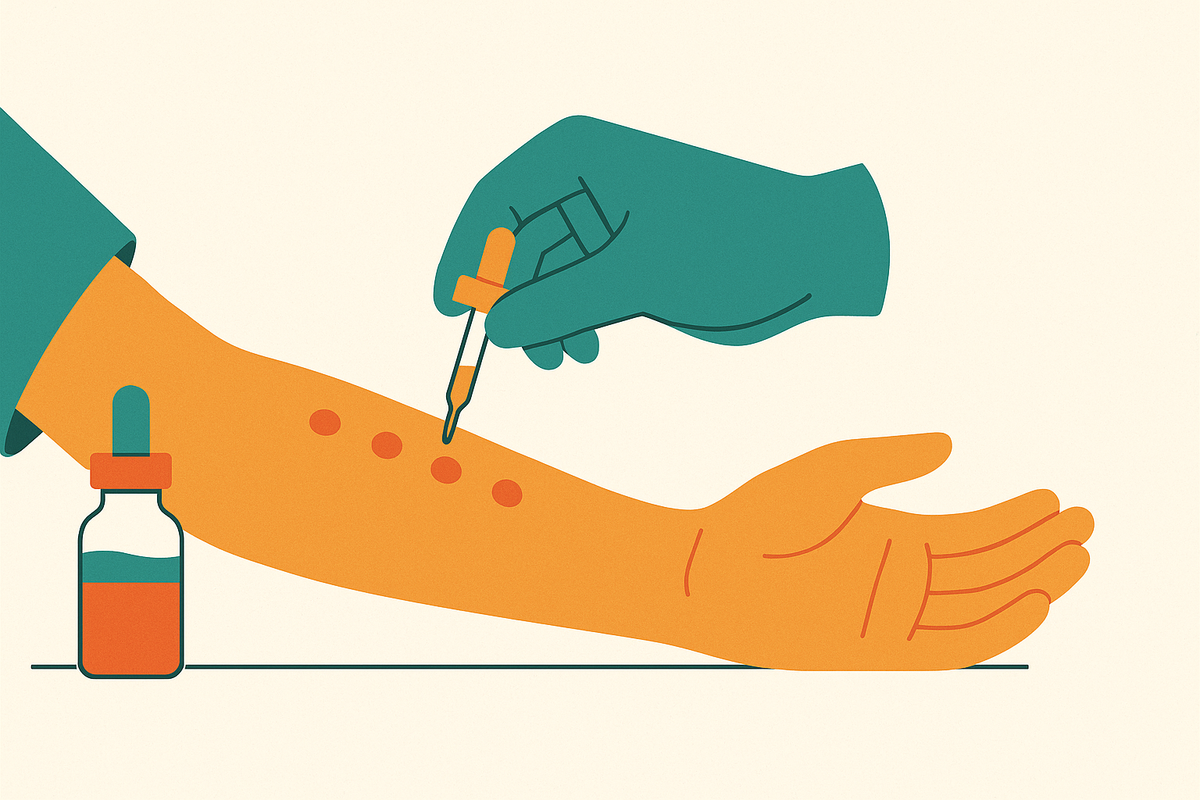
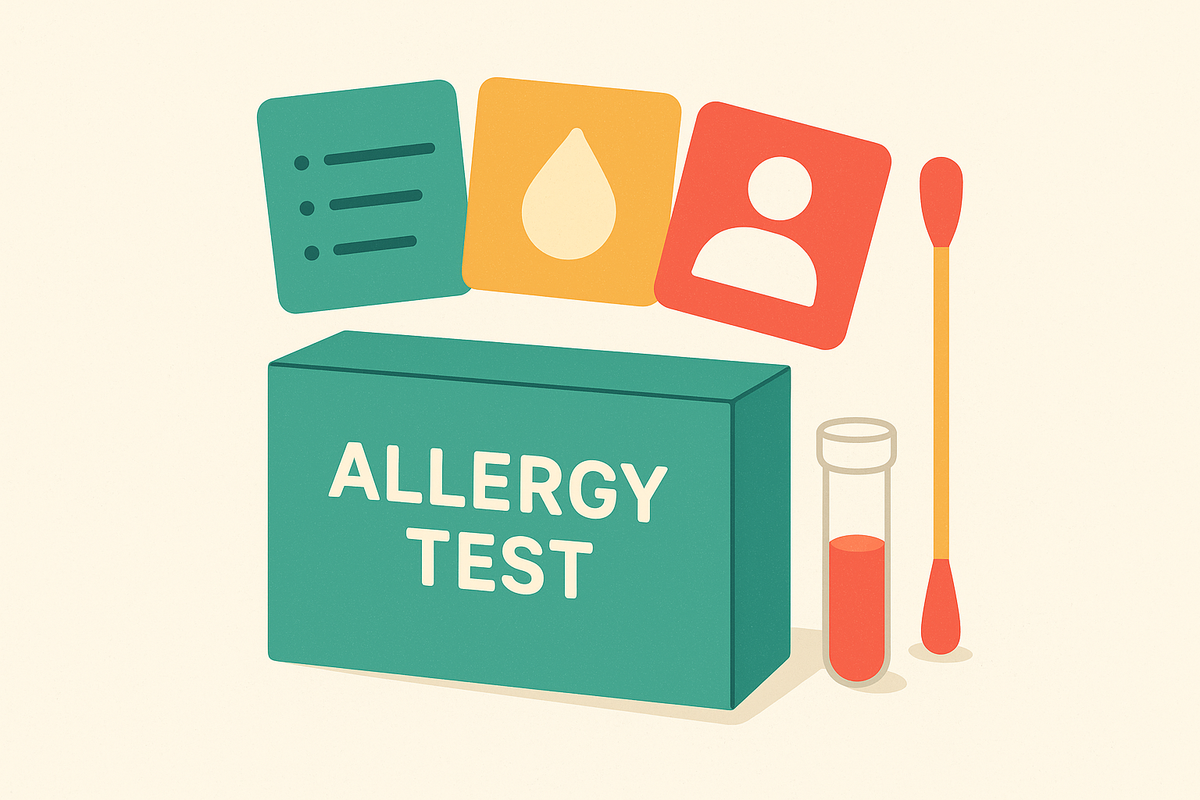
At-home testing is often where this whole process starts, and it deserves credit as a legitimate first step rather than dismissal as a lesser substitute for a lab visit. Legitimate IgE-based finger-prick tests can meaningfully identify sensitization to common aeroallergens, giving patients a real, credible starting point before a specialist ever enters the picture. These tests work by detecting allergen-specific IgE antibodies, and quality kits can screen 40 or more aeroallergens at once, covering dust mites, pet dander, pollen, and mold, with results typically back within a couple of business days to about a week. What they can't do is replace the diagnostic precision of an in-office exam. The skin prick test, still the diagnostic gold standard, reports accuracy for environmental allergens somewhere in the 85 to 95% range, and home IgE blood tests fall meaningfully short of that benchmark, sometimes producing false positives or missing certain allergies altogether. A positive IgE result at home tells someone they're sensitized to something. It does not confirm that the sensitization is what's actually driving their symptoms, and sorting that out takes clinical interpretation. For dust mite allergens, concentrations above a certain point are tied to new sensitivity developing, and higher concentrations still are linked to asthma trigger risk, while for cat allergen, the threshold for clinical significance differs from the threshold tied to asthma risk. Sorting through those distinctions in the context of one patient's full history is specialist work, not something a questionnaire can do on its own. The petri dish mold kits sold at hardware stores belong to a different category. They grow whatever mold happens to be airborne but can't identify species or quantify exposure in any way that actually informs allergy management. None of this makes at-home testing a dead end. It gives patients a vocabulary, a starting data set, something concrete to bring into a conversation with a specialist who can take it the rest of the way.
The practical questions that distinguish genuine specialist oversight from a prescription service
Everything above points toward a short set of questions patients can actually use when sizing up a telehealth allergy platform. The first is who reviews the case: is the clinician on the other end board-certified in allergy and immunology, or a general practitioner working under telehealth privileges? That single detail separates most platforms from each other more than any marketing claim does. The second is what kind of testing the platform relies on. A platform that jumps straight from a symptom questionnaire to a treatment plan is doing something different than one that incorporates IgE testing, ideally followed by actual professional interpretation, before deciding on a course of treatment. Personalization also matters: a platform offering the same standardized drop formula to every patient regardless of their specific allergen panel is not providing the same quality of care as one that builds a plan around an individual's sensitization profile. The fourth is whether immunotherapy is even part of the conversation, since a platform limited to antihistamines and nasal sprays is offering symptom management, not disease-modifying treatment, and patients deserve to know which one they're signing up for. Board-certified allergists are the clinicians equipped to design personalized immunotherapy plans, including sublingual immunotherapy delivered as FDA-approved tablets or compounded drops that retrain the immune system through at-home desensitization, and that kind of planning is available through telehealth providers such as Wyndly, alongside other platforms that offer similar specialist-led models. General practitioners and many telehealth services remain limited to symptom-management prescriptions, which is a perfectly valid choice for straightforward cases. The questions above simply help a patient figure out which situation they're actually in before they commit to a plan.