Allergy Testing Pathways for Adults Whose Primary Complaint Is Fatigue and Mental Fog
Undiagnosed indoor allergies may cause fatigue and brain fog without obvious sneezing.
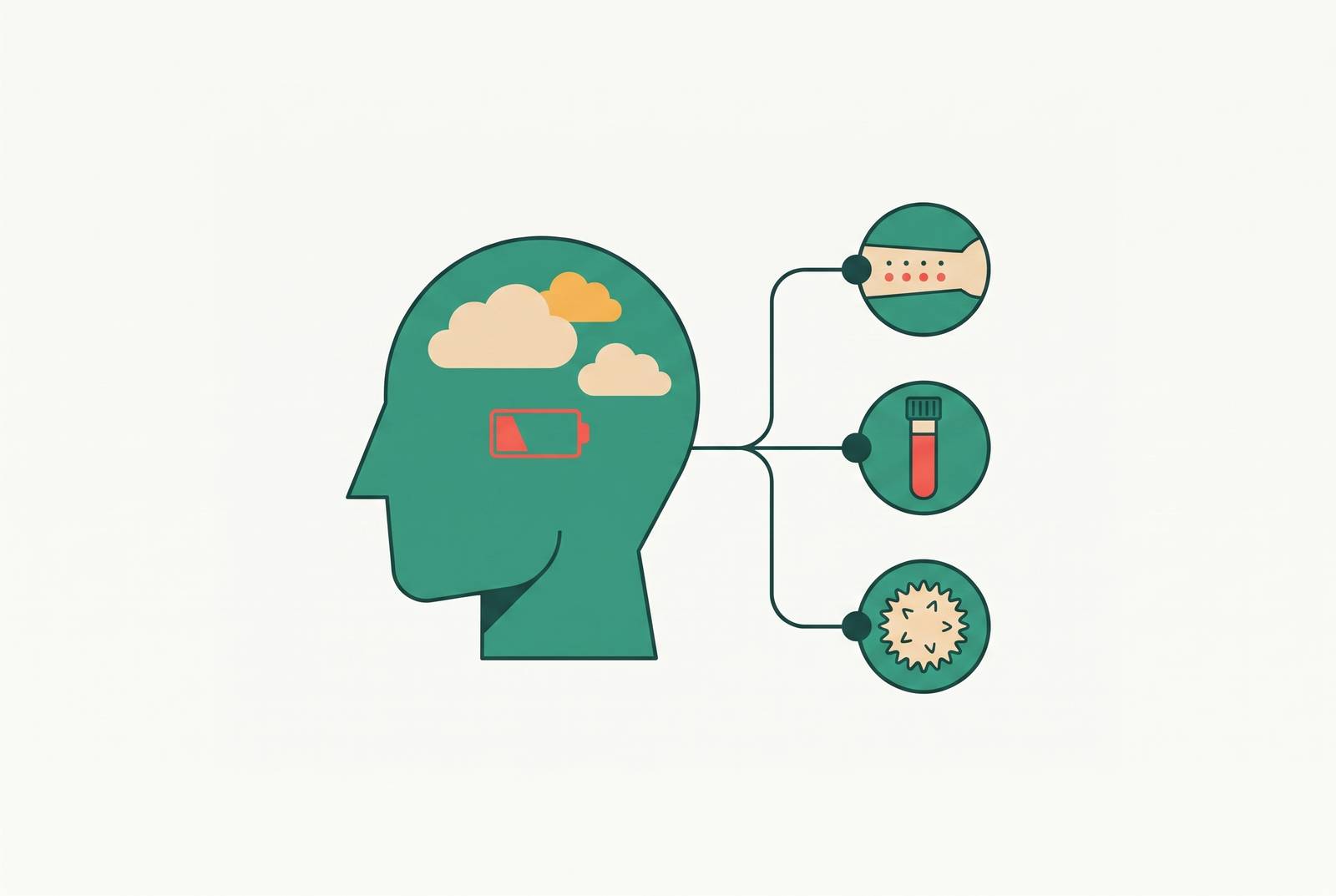
Undiagnosed allergies can contribute to persistent fatigue, mental fog, and poor sleep, even when sneezing is mild or absent. Allergic inflammation, disrupted sleep, and the effects of medication can happen together, so it can be hard to tell what is causing the symptoms. Allergy testing can help find triggers, but a diagnosis requires results that match the symptoms before treatment is chosen to change the underlying immune response.
Why adults with fatigue and brain fog rarely suspect allergies first
Stress, poor sleep habits, and aging are common reasons people give for feeling worn out or unable to think clearly. An immune response is less obvious. Adults may therefore spend years treating symptoms with caffeine, sleep aids, or over-the-counter antihistamines without looking into whether allergies play a part. The absence of a clear pollen season makes that connection easier to miss.
Indoor triggers can be especially hard to recognize because sneezing, watery eyes, and a runny nose may be mild or absent. Dust mites, indoor mold, and pet dander can cause exposure that goes on day after day, with no sharp flare when the season changes. Without that seasonal clue, fatigue may seem to have little to do with the home. Yet the connection has biological mechanisms that can be explained, and possible allergic triggers can be tested.
Can undiagnosed allergies cause chronic fatigue and inability to think clearly?
Allergic inflammation can affect energy and thinking in three ways that can overlap, including systemic immune activation, histamine-related effects, and disrupted sleep. These are not competing explanations. An adult can experience more than one at the same time, so a single complaint of “brain fog” may reflect several processes.
The first pathway begins with the immune response. The allergic cascade raises inflammatory signals called cytokines, including interleukin-6 and tumour necrosis factor, which can act on the brain and contribute to fatigue. This is the same signaling pathway involved in exhaustion during acute illness. Feeling drained can therefore reflect immune activity.
Histamine also links allergy to how the brain works. It has roles beyond nasal and skin symptoms, including effects in the central nervous system. Histamine-related changes can play a part in mental fatigue and make it hard to think clearly. The cognitive complaint has a biological basis, although that does not establish allergies as its cause in any particular person.
The third pathway runs through sleep. Allergic rhinitis can obstruct the nose, forcing mouth breathing and contributing to repeated partial arousals and reduced REM sleep. As a result, even a full night in bed may leave a person short of restorative sleep. Poor sleep then worsens daytime cognitive performance, while fatigue and fog make the exposure pattern harder to recognize.
How standard allergy medications can deepen the fatigue they are meant to relieve
Would taking an antihistamine settle the problem? First-generation antihistamines, including diphenhydramine, cross the blood-brain barrier and can cause sedation. They also inhibit acetylcholine, a neurotransmitter important for memory, focus, and mental clarity. Impairment can occur even when the person taking the medicine does not feel drowsy.
Second-generation antihistamines, including loratadine and cetirizine, are less sedating, but some people still experience cognitive slowing. Dose, timing, age, and individual metabolism can influence those effects. The distinction is useful, but not absolute. A person who takes an antihistamine each day may have fog from the allergy, the medicine, or both.
These medicines also ease symptoms without retraining the underlying immune response, so people may need to keep taking them to get relief. That creates a reason to investigate the trigger rather than assuming persistent fog means the allergy needs more symptom suppression. Prescribed medication should not be stopped on that basis. Testing and a review by a clinician can help tell the effects of allergic exposures and drugs apart, though a test alone cannot show which cause accounts for each symptom.
Which allergens most commonly drive year-round fatigue and fog, and why indoor exposures are the frequent culprit
Year-round symptoms shift attention beyond pollen alone to perennial indoor allergens. House dust mites are a confirmed cause of perennial rhinitis and live in bedding, upholstered furniture, and carpets. Exposure during sleep overlaps with the period when congestion can disrupt breathing and rest. The bedroom can therefore be an important clue.
Mold in bathrooms, basements, or HVAC systems can be relevant throughout the year, while outdoor mold has seasonal peaks in late summer and fall. Pet dander can remain airborne and on surfaces long after an animal leaves a space.
By contrast, grass, tree, and weed pollens can produce an annual pattern of worsened fatigue and fog. Someone may misattribute that allergic recurrence to a busy season at work. Timing helps narrow the possibilities without proving them. Symptoms that worsen indoors, in winter, or at night point more toward dust mites or mold than pollen, and the testing panel should reflect that exposure history.
The available testing pathways and what at-home blood tests, lab IgE assays, and in-office skin testing offer
The choice of testing depends on whether the aim is to screen for allergies, confirm a result, or plan treatment. Convenience is only one consideration. All three established pathways look for evidence of sensitization to particular allergens, but they differ in sample collection, clinical setting, and the preparation they require.
At-home finger-prick blood tests measure IgE antibodies in a small sample of blood that is sent to a laboratory. Results usually come back within a few days to a week through a secure online portal, with an email to say they are ready. Basic panels may cover common tree pollen, grass, and dust mites, while broader panels can include pet dander, mold spores, and food triggers. Broader coverage costs more, but the useful panel is the one that matches the suspected exposures.
Home collection is a legitimate entry point for someone who has never seen an allergist. It avoids an initial clinic visit. But finger-prick kits are generally seen as less accurate than full testing at a clinical laboratory, and positive results often need to be confirmed before treatment is chosen. Hair, saliva, and bioresonance screens lack clinical evidence and should not be confused with validated IgE testing.
Lab-based serum IgE testing uses blood drawn and then processed at a clinical laboratory, and it can test for more allergens. It is useful when someone cannot safely stop antihistamines or has severe eczema over potential skin-test sites. Even a reliable laboratory result, however, needs a symptom history to establish whether the sensitization is clinically relevant.
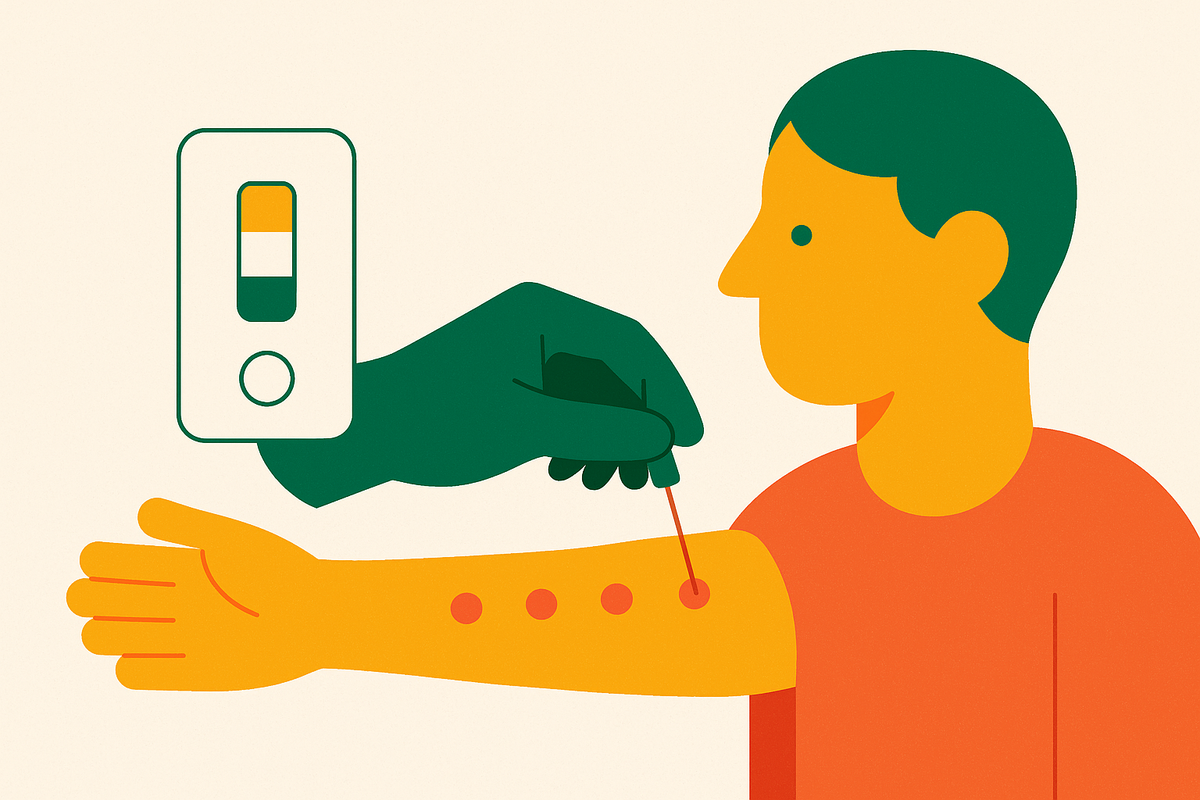
In-office skin prick testing places small amounts of allergen extracts on the forearm or back. A raised wheal with surrounding redness indicates sensitization, and results are available during the appointment. With clinical history, it is widely considered the most accurate option. Its main practical constraints are an in-person visit with a qualified practitioner and a need to stop antihistamines beforehand under the clinician’s instructions.
Why a positive test result is the beginning of a clinical conversation, not the end of one
A positive IgE result establishes sensitization, while the cause of fatigue remains to be established. That distinction prevents a common diagnostic shortcut. Some people are sensitized to allergens that are not responsible for their primary complaints. A result naming dust mites, for example, becomes more useful when the clinician can connect it with symptoms that worsen at night or indoors.
The clinical task is to correlate the evidence. Does fog worsen around the cat, during pollen season, or in winter at home, and does the test identify the corresponding allergen? A mismatch leaves the explanation open. Treating the result as a complete diagnosis can lead to unnecessary avoidance or leave the original fatigue unexplained.
Telehealth can make that interpretation accessible without a traditional in-person allergist visit. A board-certified physician can review the results, ask about symptoms over time, and make a treatment plan for that person. A 2026 retrospective longitudinal cohort study associated personalized SLIT delivered through telemedicine with sustained symptom improvement, reduced medication use, high adherence, and a favorable safety profile. That supports the usefulness of a doctor-guided remote pathway.
How sublingual immunotherapy addresses the immune root cause that testing has now identified
When testing and history establish a clinically relevant allergy, allergen immunotherapy offers a way to modify the underlying response. Sublingual immunotherapy, or SLIT, uses under-the-tongue delivery of allergen extracts as an alternative to injections. It works differently from symptom suppression. Its purpose is to make the immune system less reactive to the identified allergen over time.
Cells called tolerogenic dendritic cells take up the extracts in the lining of the mouth. They promote regulatory T cells, which progressively dampen IgE-mediated reactivity. This is the immune retraining behind the treatment. The World Allergy Organization’s 2026 SLIT position paper supports its disease-modifying role and a treatment course of at least three years.
Randomized controlled trials support clinically meaningful reductions in symptoms and medication use with grass and house dust mite SLIT tablets. Sustained benefits have been observed for one to two years after a three-year course. Improvement is not immediate, and treatment requires persistence. Evidence of reduced allergy symptoms and medication use also should not be read as a guarantee that every patient’s fatigue or fog will resolve.
In the U.S., FDA-approved tablets include Odactra for house dust mite, Grastek for Timothy grass, Oralair for a 5-grass mix, and Ragwitek for short ragweed. Custom SLIT drops are different. They are not FDA-approved, are used off-label, and are not covered by most insurers, but can address allergen combinations not covered by individual tablets. That regulatory distinction belongs in the treatment conversation, rather than being blurred by calling every formulation simply “SLIT.”
Most adverse effects are mild and local, including oral itching or tingling, and generally diminish with continued dosing. Tablet labels require the first dose under medical supervision and epinephrine availability, so home treatment still begins with clinical safeguards.
SLIT vs. allergy shots and the trade-offs for adults seeking lasting relief
SLIT and subcutaneous immunotherapy, or SCIT, offer broadly comparable clinical outcomes but differ substantially in how treatment fits into daily life. Allergy shots require in-office injections and a post-dose observation period because systemic reactions, including anaphylaxis, can occur, though they are uncommon. Clinic time is part of the commitment. For an adult already struggling with fatigue, repeated appointments may be a significant burden.
SLIT tablets require the first dose under medical supervision, after which daily doses are taken at home. Their adverse effects are mostly local oral reactions, with systemic reactions less common. Home dosing removes repeated clinic travel, but it does not remove the need for sustained adherence. The choice depends in part on which routine the patient can keep up.
FDA-approved tablets cover the specific allergens named above, while cat dander, dog dander, mold, or complex multi-allergen profiles may lead to a discussion of custom off-label drops. Those drops are typically cash-pay. For confirmed dust mite allergy, Odactra offers an FDA-approved home-dosing option, but the wider decision still depends on the allergen, safety, access, cost, and patient preference.
How to move from suspicion to confirmed diagnosis to treatment — the practical sequence for an adult starting from fatigue and fog
Track whether symptoms worsen at night, indoors in winter, around pets, or during pollen seasons. Include current antihistamine use in that history. These details help a clinician judge whether allergies could explain the pattern, with more to go on than tiredness alone.
An at-home finger-prick IgE test can be a first screen, with a panel covering dust mites, mold, pet dander, and relevant pollens when the history supports those possibilities. Clinical laboratory testing or skin testing may instead be appropriate from the outset. A positive home result may need to be confirmed before treatment is planned.
The third step is clinical interpretation, which can take place through a telehealth allergy consultation. The clinician connects the result with the symptom history and considers whether medication effects overlap with the allergy complaint. A positive test is not enough by itself. If a clinically relevant trigger is established, the fourth step is discussing a matched immunotherapy plan, including FDA-approved tablets or off-label drops where appropriate.
What about simply avoiding the allergen? Avoidance can complement treatment, but complete avoidance of perennial triggers such as dust mites is practically impossible. Immunotherapy improvement builds over months, so the plan needs realistic expectations about both daily dosing and duration. For adults whose fatigue and fog have persisted despite sleep-habit changes, stress management, and antihistamines, a testable immune contributor may be closer to identifying than expected, with much of the doctor-guided pathway accessible from home.
Sources
- Real-world outcomes of personalized sublingual immunotherapy for environmental allergies delivered through a telemedicine platform: a retrospective longitudinal cohort study - PubMed
- World Allergy Organization Sublingual Immunotherapy Position Paper: 2026 update - World Allergy Organization Journal
- Efficacy and safety of sublingual immunotherapy for allergic rhinitis: A network meta-analysis
- Why Spring Allergies Can Cause Fatigue and Headaches