At-Home Allergy Testing Kits That Feed Into Treatment Plans
These kits identify triggers so treatments can target the actual cause instead of just symptoms.
81 million people in a particular country. The AAFA's 2025 update reports that 81 million people carried a seasonal allergic rhinitis diagnosis as of 2021. Most of them reach for an antihistamine or a nasal spray without ever finding out what's actually setting off the reaction. That's the gap this piece is about: a pill that blocks histamine release does nothing to tell you whether the real problem is dust mites in the bedsheets, oak pollen outside the window in April, or a coworker's cat. Without that specific answer, treatment stays generic, managing symptoms instead of addressing what's causing them. At-home allergy testing exists to close that gap, but only if the result actually leads somewhere.
What allergies are doing to the body beyond the obvious symptoms
Sneezing and itchy eyes are the visible part. The less visible part happens at night, and it compounds.
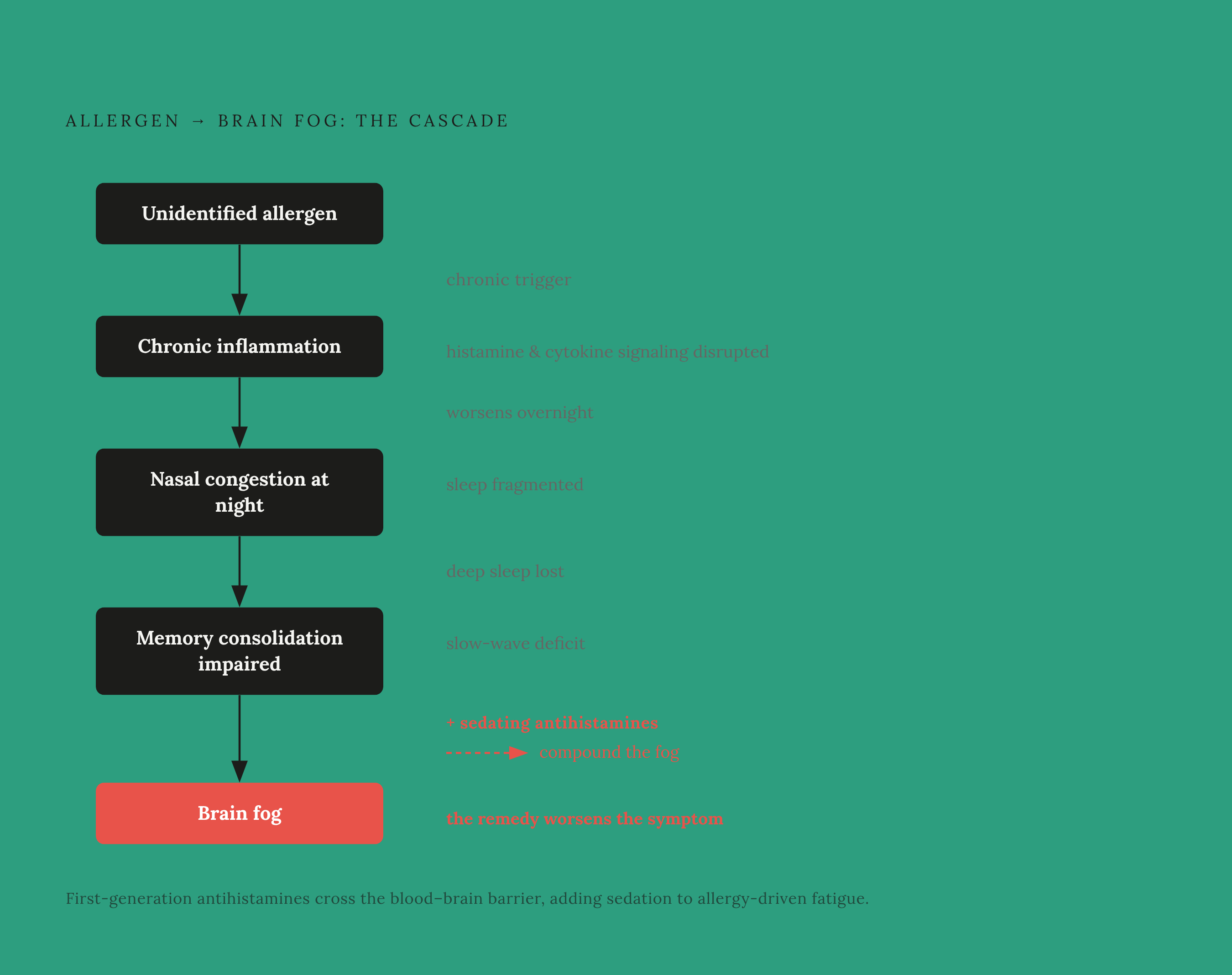
Histamine isn't just a nasal-passage chemical. Carefreeallergy.com reports that histamine also works as a neurotransmitter that helps regulate alertness and sleep cycles. Allergic inflammation throws off histamine balance and cytokine signaling, causing fatigue and a dulled ability to focus, not just congestion.
Congestion itself tends to get worse after dark. Swollen nasal tissue restricts airflow, which pushes people into mouth breathing and fragments sleep through the night. Research on untreated allergic rhinitis backs this up, pointing to more nighttime awakenings and less time in deep sleep. And deep sleep is where memory consolidation happens, so missing it night after night adds up to daytime brain fog that has nothing to do with willpower or caffeine intake.
Older antihistamines are known to carry sedative effects. So a medication taken to relieve allergy symptoms can end up compounding the very grogginess and cognitive fog those symptoms already caused. Follow the chain all the way through. An unidentified allergen triggers chronic inflammation. Chronic inflammation disrupts sleep. Disrupted sleep produces brain fog. Brain fog gets treated with more medication, some of which makes the fog worse. None of that fixes the actual trigger. Which raises the obvious next question: how does someone find out what the trigger even is?
How at-home allergy tests work, the mechanics from finger prick to results dashboard
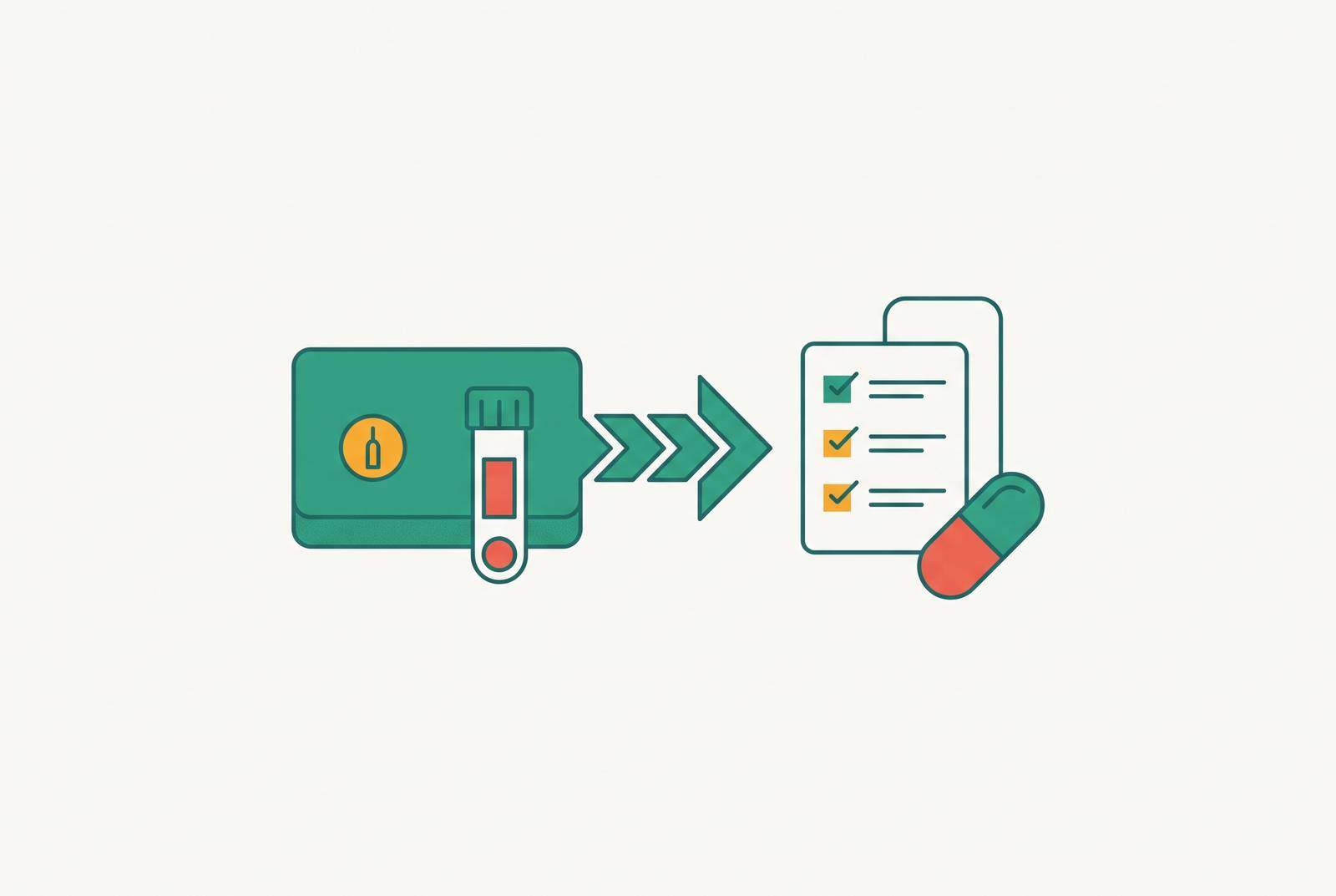
Most at-home environmental allergy kits work the same basic way. Allergyworx.com's 2025 data describes how a small finger-prick blood sample gets collected at home, then mailed to a certified lab, where it's measured for IgE antibodies, the immune markers directly tied to allergic reactions.
Results appear within a week, delivered by email or through a secure app. Some of the newer kits pair with a mobile dashboard that tracks symptoms over time, so a patient can see whether reactivity lines up with, say, a spike in local pollen counts.
Panel size varies quite a bit. A solid environmental panel covers 40 or more aeroallergens. Tooallergic.com's 2026 figures show some go further, up to 80 or 100 allergens, aimed at wide-net screening for patients whose symptoms don't point clearly at one culprit. Blood-based sIgE testing generally doesn't require stopping antihistamines beforehand, which matters for anyone too symptomatic to go medication-free for a week just to get tested.
Allergyworx.com and premiumallergy.com report that cost runs from around $60 to $200 for most kits, with advanced panels reaching closer to $500. Many are eligible for FSA or HSA spending, so check before assuming this comes entirely out of pocket. A good environmental panel should cover the categories the AAFA lists as the primary indoor and outdoor triggers: tree pollen, grass pollen, weed pollen, mold spores, dust mites, cockroaches, cat and dog dander, and rodent allergens.
The IgE vs. IgG distinction that determines whether a test result is clinically meaningful
This is what trips a lot of people up.
IgE antibodies are the ones that actually drive allergic disease. They trigger histamine release, and they're behind hives, swelling, sneezing, and in severe cases anaphylaxis. Discoverymedcenter.com notes that clinical allergy testing targets IgE specifically.
IgG antibodies are a different animal. They reflect immune exposure and memory, not allergic reaction. Finding IgG reactivity to a food usually means the body has encountered that food before and built a normal tolerance response to it, not that it's dangerous. Yet plenty of consumer "food sensitivity" kits measure IgG4 specifically. The University of Colorado has pointed out that this reflects a normal immune response to gut bacteria and food, not pathological sensitivity, and some of these kits generate elimination lists based on it anyway. That can push people into cutting out foods for no real medical reason.
The professional bodies have weighed in directly on this. Discoverymedcenter.com reports that major allergy professional bodies have published statements advising against IgG testing as a way to diagnose allergies.
So how accurate is the good stuff? Premiumallergy.com data shows one of the largest at-home testing companies reports accuracy rates between 70% and 90% for its environmental tests. That's useful for identifying likely sensitivities, but it's not a stand-alone diagnosis. Discoverymedcenter.com reports that skin prick testing, done in-office, generally exceeds 90% sensitivity for common triggers. Before trusting any kit, confirm certification under a national clinical-lab standard equivalent to CLIA. diagnostic processing, allergen-specific IgE panels rather than IgG-only "sensitivity" tests as the main diagnostic tool, and coverage of 40 or more aeroallergens spanning the main indoor and outdoor trigger categories if the goal is environmental screening.
Even a clean, well-designed sIgE result is still just a data point sitting on a page. What happens with that data point, and who reads it against the patient's actual symptom history and where they live, is where the real value gets decided.
Why the same test result means different things for different patients, the case for allergen-specific interpretation
Two people can get the identical positive result for grass pollen and need completely different plans. That's not a contradiction, it's geography and biology doing their work.
In a midwestern region of the country, allergenic trees like maple, elm, oak, and birch pollinate for six to eight weeks starting with the spring thaw. Grass pollen tends to peak in the early summer months. Weeds take over in the late summer and fall. A positive grass-pollen result means something very different for someone living through that seasonal rhythm in Minnesota than it does for a patient in a warmer, less seasonal climate.
Dust mites tell a similarly granular story. The two major species behind most reactions, Dermatophagoides pteronyssinus and Dermatophagoides farinae, together account for roughly 60% to 70% of IgE reactivity in allergic people. Knowing exactly which proteins a patient reacts to shapes how a formulation gets built later on.
Pet allergies get misunderstood constantly. The allergen isn't the fur itself, it's proteins shed from skin, oil glands, and saliva that dry out and become airborne. Cat-sensitive and dog-sensitive patients carry distinct protein profiles, so a treatment plan has to target the right one, not just "pet dander" as a blanket category.
Mold adds another layer. Outdoor spores like Alternaria, Aspergillus, and Penicillium appear in air samples year-round, while indoor mold from bathrooms and basements sits there as a constant, perennial exposure. A panel that separates outdoor from indoor mold helps determine whether the fix is avoidance (fixing a damp basement) or immunotherapy.
None of this means a positive result on four allergens turns into four separate treatment tracks. An allergist reviewing the panel groups the findings, ranks them by reactivity and symptom severity, and sequences treatment around the patient's actual exposure environment. That review step, done by a clinician rather than an algorithm spitting out a checklist, is where a test result becomes an actual plan instead of a printout.
How sublingual immunotherapy turns a specific allergen profile into a treatment formulation
Sublingual immunotherapy, or SLIT, works by taking advantage of biology already sitting under the tongue. Research published in JACI In Practice shows Langerhans cells, myeloid dendritic cells, and macrophages in oral tissue, the tonsils, and the draining lymph nodes in the neck are naturally biased toward building tolerance rather than triggering inflammation, inducing TH1 responses and IL-10-producing regulatory T cells.
Over the course of treatment, over time, the immune system shifts toward tolerance, with changes in antibody signaling that reduce how strongly mast cells and basophils respond to the trigger.
Four SLIT tablets currently carry approval from a national drug regulator, and each targets a named allergen. Odactra covers house dust mite species (Dermatophagoides farinae and pteronyssinus) for ages 5 to 65, taken daily year-round. Grastek addresses Timothy grass, same age range, started at least 12 weeks before grass season hits. Oralair covers a five-grass mix, sweet vernal, orchard, perennial rye, Timothy, and Kentucky bluegrass, started around four months ahead of season. Ragwitek targets short ragweed, started at least 12 weeks before ragweed season begins. All four carry boxed warnings, and the first dose has to happen in-office, with 30 minutes of observation and epinephrine on hand, before dosing moves to home for the rest of treatment.
What about triggers that don't have an approved tablet, like cat dander, mold, or several pollens at once? That's where off-label compounded SLIT drops come in, built to match an individual's specific test results. This is arguably the point where the testing data does its most direct work, shaping an actual formulation rather than just informing a conversation. A Phase III trial published in Allergy in 2025 backed the effectiveness and tolerability of an SQ tree sublingual tablet in children, extending the evidence base to a trigger the four approved tablets don't yet cover. The formulation question was never just which allergens to target. It's also about dose and sequencing, so a doctor reviewing the results adds context the raw test data alone doesn't provide.
How long treatment takes and what the evidence says about durability
Immunotherapy isn't a quick fix, and it's worth being upfront about that. Larenas-Linnemann's presentation at AAAAI 2026, reported by HCPLive, shows clinical trial evidence that at least three years of high-dose sublingual immunotherapy is needed to produce effects that actually last.
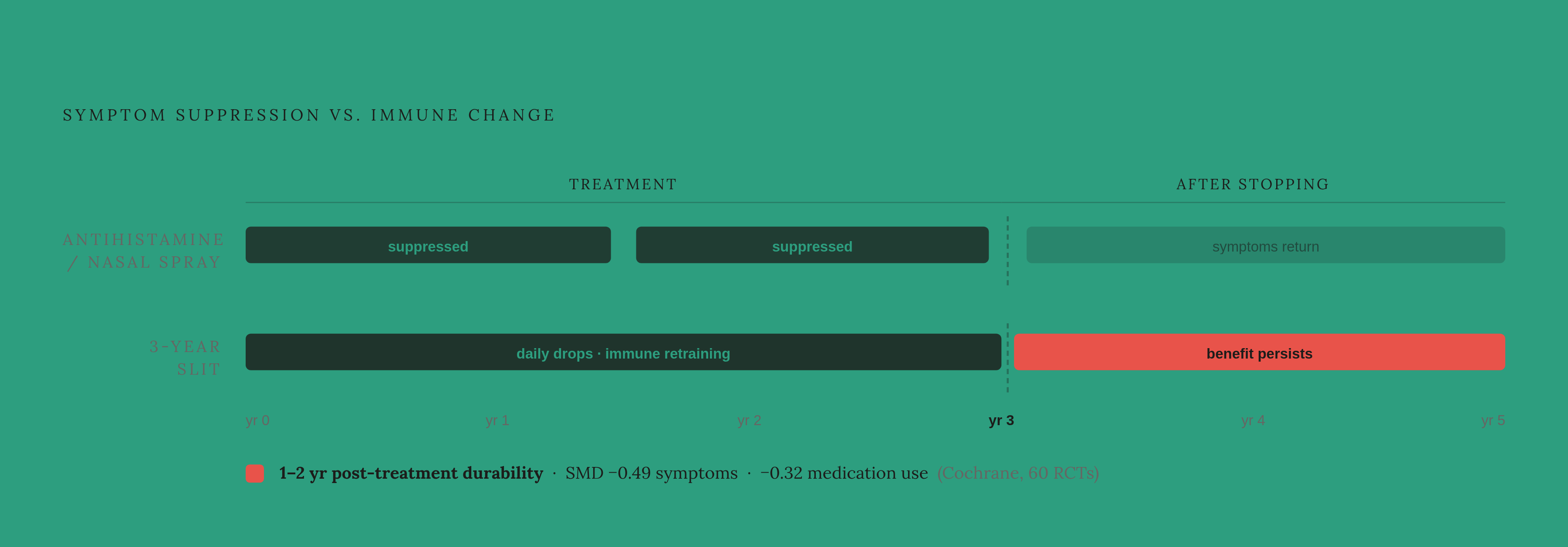
But the payoff for that time investment looks real. HCPLive reported that studies on grass pollen sublingual tablets found patients completing three years of therapy kept their symptom improvement for at least two more years after stopping treatment. That's the immune system actually changing, not just symptoms being suppressed while a drug is active.
A Frontiers in Allergy review from September 2026 backs this up with a broader look at the randomized trial evidence: grass and house dust mite SLIT tablets produced clinically meaningful drops in both symptoms and medication use, with benefits still holding one to two years after a three-year course ended in key trials. Real-world data lines up with the trials and adds something extra: a lower risk of new asthma onset and reduced long-term medication use in patients who went through SLIT.
The Cochrane review, covering 60 randomized controlled trials, found SLIT reduced symptom scores by a standardized mean difference of -0.49 and medication use by -0.32 compared to placebo, with no severe systemic reactions or need for epinephrine reported across the included trials.
Compare that to how antihistamines and nasal sprays work. They relieve symptoms only while they're being taken. Stop the medication, and the immune system reverts right back to where it started. The testing-to-SLIT pathway is the one route in this whole picture that changes where the immune system is heading, not just how it feels day to day. Larenas-Linnemann's AAAAI 2026 remarks indicate that updated practice parameters for allergen immunotherapy are in development now, following a process that's taken more than two years so far, and the update is expected to expand guidance specifically around sublingual therapy.
What the testing-to-treatment process looks like in practice, from kit to personalized plan
Laid out step by step, the path from kit to treatment looks fairly straightforward, though each step does real work.
It starts with ordering a CLIA-certified sIgE environmental panel covering 40 or more aeroallergens, collecting a finger-prick sample at home, and mailing it off. Results come back within about a week, usually through a secure app or an emailed report showing reactivity levels broken down by allergen.
From there, a board-certified physician reviews the panel alongside the patient's symptom history, where they live, and what time of year symptoms tend to flare. This is the interpretation step, the one that turns a list of numbers into something a clinician can actually act on. Based on that review, a personalized immunotherapy formulation gets built, matching the specific allergens identified at appropriate doses, using an FDA-approved tablet where one exists or compounded drops where it doesn't. Treatment begins with the required first-dose supervision, and ongoing dosing happens at home after that. Symptoms get tracked over the course of treatment, and the formulation can be adjusted as the immune response shifts.
Telehealth has made the physician-review step far more accessible. It closes the distance between getting a result back and actually having a qualified clinician look at it and act, without requiring a specialized in-office visit just to get that conversation started. On cost, plans that start at accessible monthly rates and qualify for FSA or HSA spending put this pathway in the same range as, or cheaper than, years of ongoing symptom medication, which matters given how often allergy care costs catch people off guard.
Services like Wyndly build around exactly this pathway: at-home IgE testing feeding directly into a physician-reviewed, personalized SLIT plan, rather than a kit that ends with a PDF and no next step. That's the dividing line. A test-only service hands over a result and calls it done. A test-to-treatment pathway treats the result as the beginning of the conversation, not the end of it.
How to evaluate whether an at-home testing service is set up to connect results to treatment
The test itself isn't the differentiator anymore. Plenty of kits now measure sIgE accurately and cover a wide enough panel to be clinically useful. So the real question to ask before ordering one is simpler and a little more pointed: what happens the day after the results arrive?
Does a licensed physician actually review the panel against personal symptom history and geography, or does an algorithm auto-generate a generic report? Is there a clear route from result to treatment, whether that's an FDA-approved SLIT tablet or a compounded formulation built around the specific allergens identified? Is pricing transparent enough to know upfront what testing costs versus what ongoing treatment costs? And is there a way to track symptoms and adjust the plan as treatment progresses, rather than a one-time snapshot with no follow-up?
A result sitting in an inbox doesn't change anyone's spring. What changes it is a formulation built around that result, dosed correctly, and followed through for the three or more years the evidence says it takes to actually shift the trajectory. That's the standard to hold any at-home testing service to.