Signs of Environmental Allergies in Children Under 12
Parents often mistake persistent allergy symptoms for colds, behavior problems, or poor sleep.
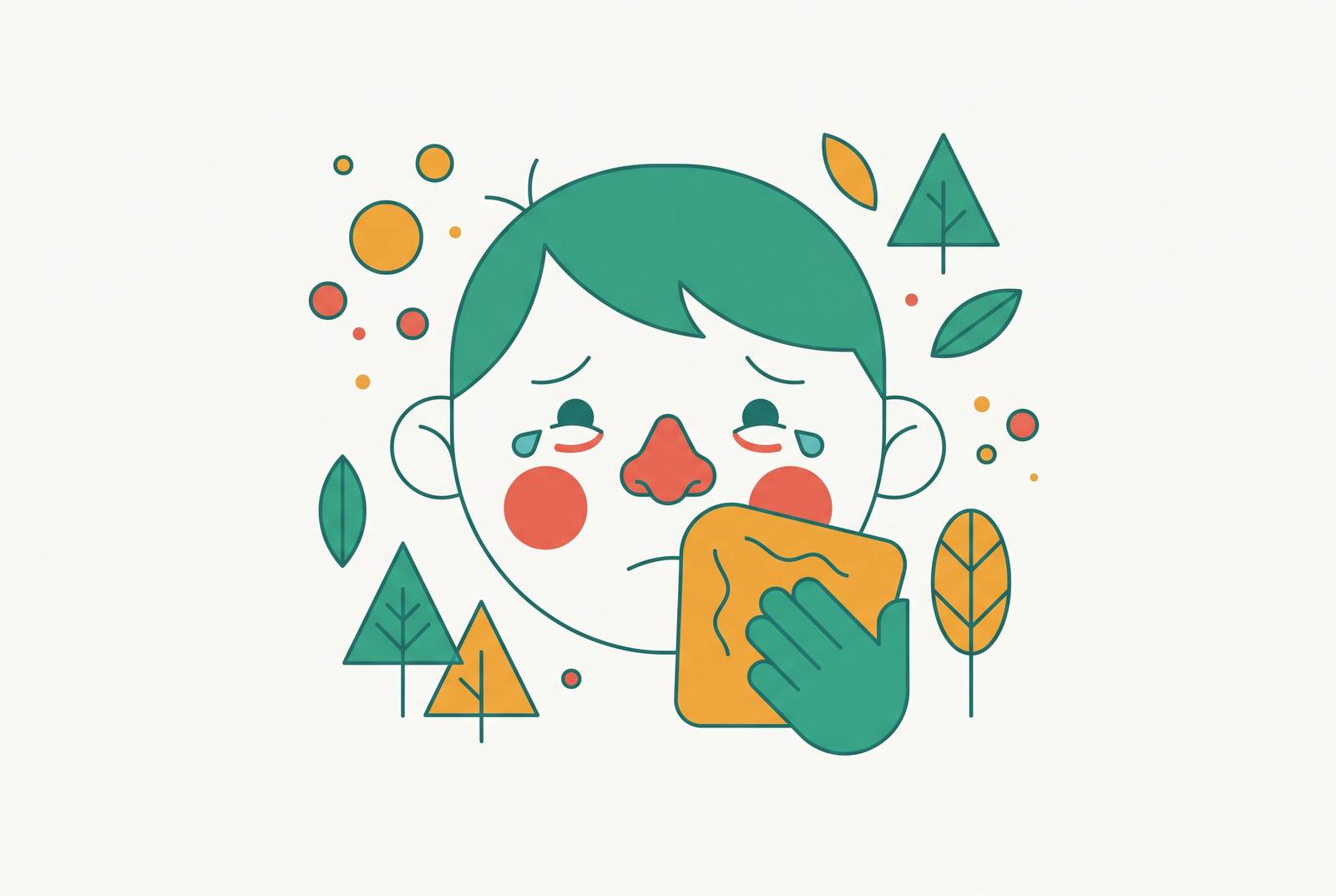
Environmental allergies in children under 12 often present in ways that parents routinely mistake for colds, behavior issues, or poor sleep habits, and recognizing the complete, often-overlooked symptom picture is the key to getting kids the right help sooner.
Why environmental allergies in children are so commonly missed
An estimated 7.1 million kids in the United States report environmental allergies CHOP - Seasonal Allergies: Keeping Symptoms in Check. That's a large number of households dealing with sneezing, congestion, and itchy eyes on a regular basis, yet most of those parents are treating the wrong thing, or not treating anything. Why does that keep happening? Because the symptoms look almost identical to a cold, or to a kid who just didn't sleep well, or to a kid who's simply having an off week behaviorally.
Allergies in children have climbed in incidence since around 1970, and the gap between how common they are and how well they're recognized has widened right along with it ACAAI - Dust Allergies. More kids have allergies now than a few decades ago, but the playbook for spotting them hasn't caught up. That mismatch has a cost: delayed recognition means prolonged symptoms, and prolonged symptoms compound. Sleep gets worse. School performance slips.
None of this is a knock on attentive parenting. Most parents miss these signs because the symptoms genuinely overlap with a dozen other explanations, not because they weren't paying attention. The job, then, is learning to read the complete picture rather than reacting to the first symptom that appears.
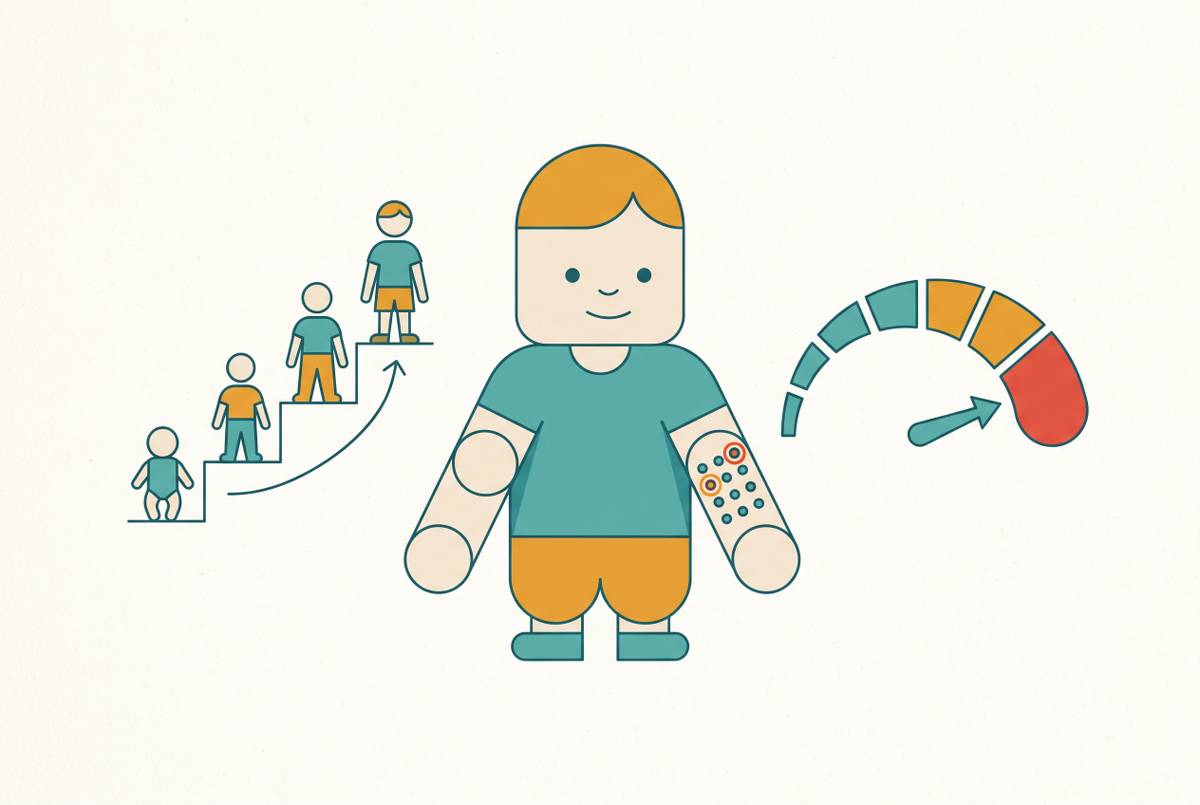
When environmental allergies typically start showing up by age
Children under two are generally less likely to develop environmental allergies, and there's a straightforward biological reason for it: sensitization requires prior exposure. A body has to encounter an allergen, react to it, and build up that reactivity over repeated contact. An infant simply hasn't had time to accumulate that exposure to something seasonal, like tree pollen.
Indoor allergens are a different story. Dust mites, mold, and pet dander can trigger symptoms far earlier, sometimes in the first year or two of life, because the exposure is constant rather than seasonal. A baby sleeping in a room with a dust mite population doesn't need a springtime bloom to react. The allergen is right there in the bedding every night.
That distinction matters for how parents interpret what they're seeing. A toddler sneezing all spring is describing a different clinical picture than an infant sneezing in January. Both deserve attention, but they point toward different triggers and, eventually, different treatment conversations. As kids get older, into the school-age years, symptoms tend to become more noticeable and more consistent, since repeated seasonal exposure has had time to build. The allergy picture isn't fixed either. New sensitivities can emerge as a child ages, and old ones can fade. Parents shouldn't assume that because a toddler tolerated tree pollen fine last year, this year will look the same.
The recognizable symptoms parents usually catch (and why they still get confused for colds)
The core list is familiar to most parents once it's spelled out: a stuffy or runny nose with clear, watery drainage, frequent sneezing (especially mornings, after outdoor play, or around pets), itchy eyes and throat, a cough or sore throat from postnasal drip, and dark circles under the eyes. Most of these show up at some point in a young child's life regardless of allergies, which is exactly the problem.
Sniffles, sneezing, congestion, and itchy eyes are common in children generally, especially at certain times of year, so a parent looking at one isolated symptom has almost no way to tell allergy from cold on sight. That's not a failure of observation.
The separating clues are less about the symptom itself and more about its pattern. Allergies tend to last longer than one to two weeks. Sneezing from a cold runs its course in days. Sneezing from allergies can drag on for weeks or months, in some cases the entire span of a pollen season. That duration gap is often the single most useful clue a parent has, and it costs nothing to track: just note the date symptoms started and whether they've let up.
Even armed with that pattern-matching, though, the obvious symptoms only tell half the story. The subtler signs are the ones most likely to get waved off as unrelated.
The less-obvious physical signs that are distinctly allergic in children
In a child with unmanaged allergies observed for long enough, a specific hand motion appears: repeatedly pushing or rubbing the nose upward with the palm, driven by itching or congestion that won't quit. Pediatric literature calls it the allergic salute, and it's not just a passing habit. Over months or years of repetition, it can leave behind a small horizontal crease across the bridge of the nose, a physical marker that's easy to spot once a parent knows to look for it.
Dark or puffy circles under the eyes, often called allergic shiners, tell a similar story. They're not fatigue. They come from nasal congestion and swelling that affects blood flow in the tissue around the eyes, so a kid who's sleeping plenty can still show up with shiners if congestion is chronic. Chronic throat clearing and a raspy voice from postnasal drip fall into the same bucket, along with a cough that gets worse specifically at night, when mucus drains while lying flat. Mouth breathing during sleep is another marker parents notice once they start paying attention to it: a persistently blocked nose forces the switch from nose breathing to mouth breathing, and it's often easiest to catch at bedtime.
Redness and inflammation of the eyes without any infection, known as allergic conjunctivitis, rounds out the list of signs that look alarming in isolation but make total sense once allergies are on the radar.
Roughly 8 out of 10 children with asthma also have allergic rhinitis UH Hospitals - Environmental Allergies in Children. Wheezing, or a cough that shows up specifically during or after exercise, in a child who already has allergy symptoms is a combination that deserves prompt evaluation rather than a wait-and-see approach. Kids with eczema or existing food allergies also carry elevated risk for allergic rhinitis, a progression sometimes called the atopic march, one allergic condition setting the stage for the next.
Why treating allergies requires more than managing symptoms
Outdoor allergens run on a calendar, and once a parent learns it, symptom timing stops looking random. Spring brings tree pollen, from birch, beech, oak, ash, olive, cypress, juniper, and cedar. Late spring into summer shifts to grass pollen, with species like timothy, sweet vernal, ryegrass, and bluegrass peaking; in the Northern Hemisphere the grass pollination window runs roughly March through September, with the heaviest concentration in May, June, and July. Late summer and fall bring weed pollen, ragweed chief among them, along with mold spores that thrive as vegetation breaks down.
That's just true, especially once daycare or school starts, and it's why a single sneezy week doesn't mean much on its own. They're perennial, present year-round, and often worse in winter simply because kids spend more time indoors then. Symptoms they produce, sneezing, runny nose, scratchy throat, coughing, wheezing, look identical to seasonal allergy symptoms, just without a seasonal on-off switch ACAAI - Dust Allergies.
Mold is another year-round contributor, thriving in damp, warm, dark corners: bathrooms, kitchens, basements. It's not confined to the house, either. Spores are also present at schools and daycare centers, so a child's allergy symptoms might have as much to do with a classroom as with their bedroom. Indoor mold exposure during childhood has been linked to asthma development, which raises the stakes on identifying and addressing it early. Pet dander adds a fourth layer: skin flakes, saliva, and urine all carry allergenic proteins, cat dander is the most commonly implicated type, and its effect compounds when it mixes with ordinary household dust, becoming harder to isolate as a single cause.
For a parent trying to make sense of a symptom pattern, this becomes a useful diagnostic exercise. Symptoms that spike every spring without fever point toward tree pollen. Symptoms that worsen at home but ease up on a trip away suggest something indoors, dust or dander. Symptoms that are constant year-round but worse in winter point toward dust mites or mold. None of this requires guesswork once the pattern is tracked for a few weeks.
The hidden consequences parents mistake for behavior, personality, or separate health problems
Nasal congestion and coughing interrupt sleep, and the effect isn't trivial. Reporting from 2021 found that people with untreated allergic rhinitis experience more frequent nighttime awakenings and less deep sleep. Deep sleep is when the brain consolidates memory and the body recovers physically, so losing it is a significant loss. It's a nightly deficit that adds up.
In children specifically, sleep deprivation often doesn't look like sleepiness at all, making it easy to misread. Instead of appearing tired, they often come across as hyperactive, irritable, or inattentive. The signs to watch for overnight include snoring, mouth breathing, gasping, labored or paradoxical breathing, excessive sweating, restless movement, leg kicking, and even hyperextending the neck to open the airway. Any one of those, happening night after night, warrants a second look.
The daytime fallout mirrors the nighttime cause: inattentiveness, trouble focusing, mood and behavioral problems, morning headaches, general fatigue. A child who seems distracted in class might instead be struggling with something other than an attention problem. A child who seems distracted in class may be struggling with poor sleep caused by congestion. There's a chemical piece to this too. Histamine isn't just the thing antihistamines block, it also functions as a neurotransmitter that helps regulate alertness and sleep cycles. When allergic inflammation throws off histamine balance and the immune system's cytokine signaling, both energy and mental sharpness can take a hit.
The physical consequences run even further, into places most parents wouldn't think to look. Persistent nasal blockage forces a child to breathe through the mouth instead of the nose, and that changes the airflow patterns shaping the still-developing bones of the face. Over time, the face can grow abnormally long. That's not a cosmetic footnote. It sets off a chain reaction: teeth can come in at abnormal angles, producing an overbite that eventually needs braces or other orthodontic treatment. Chronic mouth breathing separately contributes to dry mouth and can affect posture and oxygen levels overnight.
Speech and hearing sit in this same blind spot. Allergic inflammation and fluid buildup in the ear can cause ear infections and reduced hearing, and if that happens during the exact window when a child is learning to talk, the hearing loss can interfere with speech development. Taken together, a pattern emerges: parents and teachers often read these effects, the fidgeting, the mood swings, the mouth breathing, the slow speech progress, as ADHD, as a behavioral quirk, as just how this kid is, when they're actually downstream of a treatable allergic condition. Why managing symptoms is not the same as treating allergies, and what treating them looks like
How to tell the difference between ongoing allergies and a run of bad luck with colds
Young kids get a lot of colds. That's just true, especially once daycare or school starts, and it's the reason a single sneezy week doesn't mean much on its own. Pattern is what separates a normal cold season from something allergic, and a few markers do most of the work: symptoms lasting more than one to two weeks. Clear, watery nasal drainage rather than the thick, discolored kind is another tell.
Physical markers help too, and they're ones a cold essentially never produces: the allergic salute, allergic shiners, a nasal crease, chronic mouth breathing. If a parent has noticed any of those alongside the pattern above, allergies are the more likely explanation.
Call the pediatrician for persistent congestion or sneezing, an ongoing cough, disrupted sleep, breathing difficulty, frequent sinus infections, or symptoms that just aren't budging with over-the-counter treatment. If symptoms are affecting sleep, school, behavior, or activity levels, and not just day-to-day comfort, that's a signal to get evaluated rather than ride it out for another season.
A child who seems distracted in class might have poor sleep, not an attention problem. Skin prick testing, or at-home finger-prick options, can pin down exactly which allergens are driving a child's symptoms. Testing pinpoints exactly which allergens are driving a child's symptoms, so treatment becomes targeted instead of a broad guess.
If the symptom picture laid out here sounds like a child already known to a reader, the next move is testing.
Antihistamines, nasal sprays, and decongestants do real work, they bring down the sneezing, the congestion, the itching, in the moment. Testing removes the guesswork. Stop the medication, or keep the exposure going, and the symptoms come right back. That's the ceiling of symptom management: it's maintenance, not resolution.
Allergen-specific immunotherapy works differently. It involves administering gradually increasing doses of the actual allergen causing the reaction, training the immune system over time to stop overreacting to it. It's the only approach among current options that targets the underlying hypersensitivity itself rather than papering over what that hypersensitivity produces. Sublingual immunotherapy, delivered as drops or FDA-approved tablets placed under the tongue, offers a version of this desensitization that doesn't require weekly injection visits, which makes it a realistic option for families who can't commit to that kind of in-office schedule.
Ask a pediatrician or nurse practitioner directly about whether immunotherapy makes sense for a given child. It's a long-term option, distinct from the symptom relief sitting in most medicine cabinets, and it's worth putting on the table rather than assuming the antihistamine aisle is the only tool available.
The timing argument matters as much as the treatment itself. Deep sleep is when the brain consolidates memory and the body recovers physically, so losing it is a significant loss. It's about trajectory. Catching allergies early, before mouth breathing starts reshaping facial bones, before fragmented sleep compounds across a school year, before hearing loss has a chance to interfere with speech, is about trajectory, not just making a kid more comfortable this week. It's testing.