Do I Have Allergies or a Cold
Colds end when the virus clears; allergies persist as long as the trigger does.
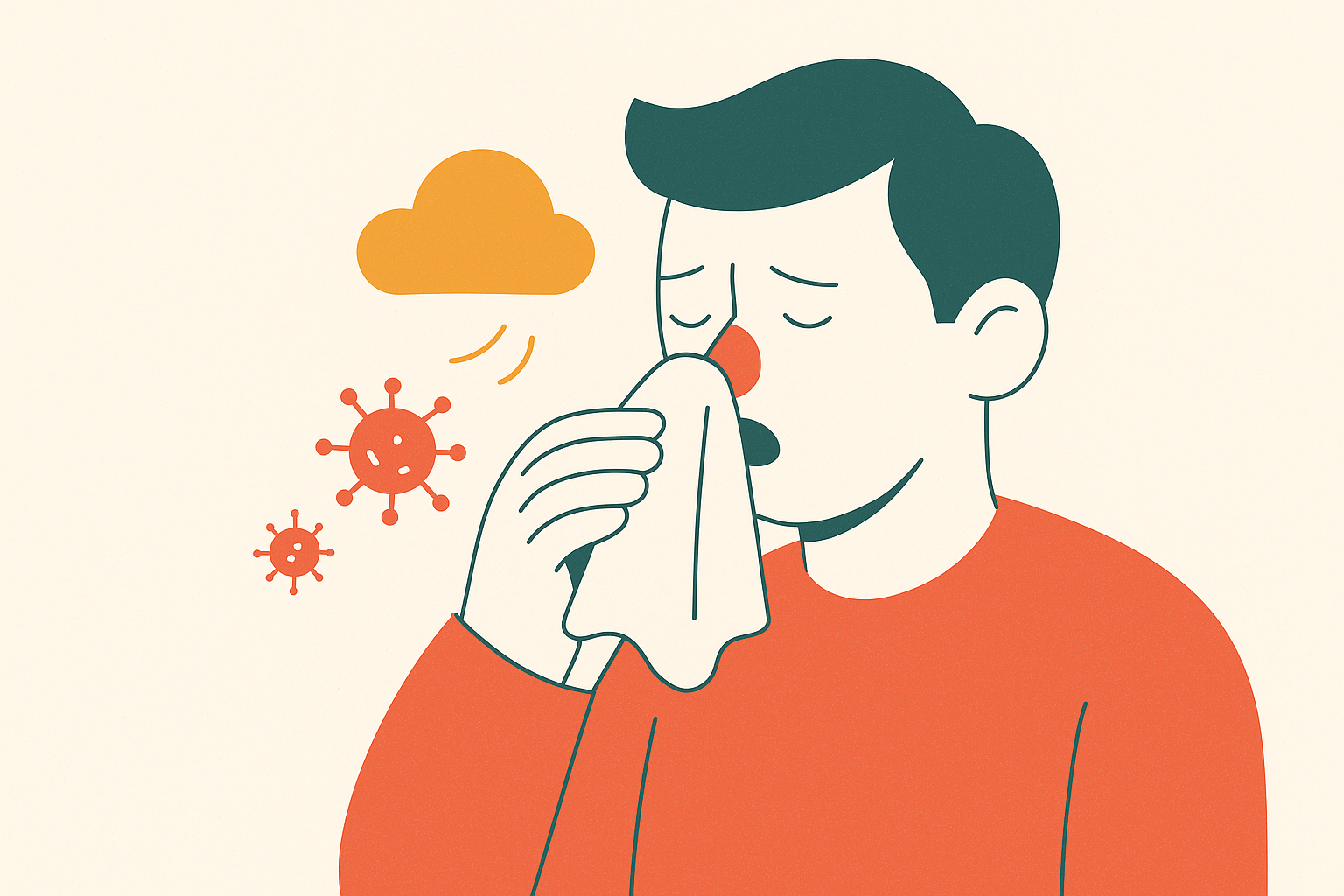
A cold is a viral infection. Your immune system detects a pathogen, mounts a defense, and over the course of several days, clears it. Beginning, middle, end. The story resolves because the virus is either present or it isn't.
Allergies don't work that way. The immune system encounters something harmless, pollen, pet dander, dust mite proteins, and treats it like a genuine threat. Histamine and other inflammatory mediators flood the area to fight something that requires no fighting. On the surface, those mediators produce symptoms nearly indistinguishable from a cold. Under the surface, there's no resolution point. As long as the trigger exists, the response continues.
Both conditions produce histamine. That's the source of the confusion. But a cold resolves when the virus clears. Allergies have no natural ending. One is a temporary immune response; the other is self-perpetuating. That's the distinction everything else in this piece turns on.
The Symptoms That Actually Separate a Cold From Allergies
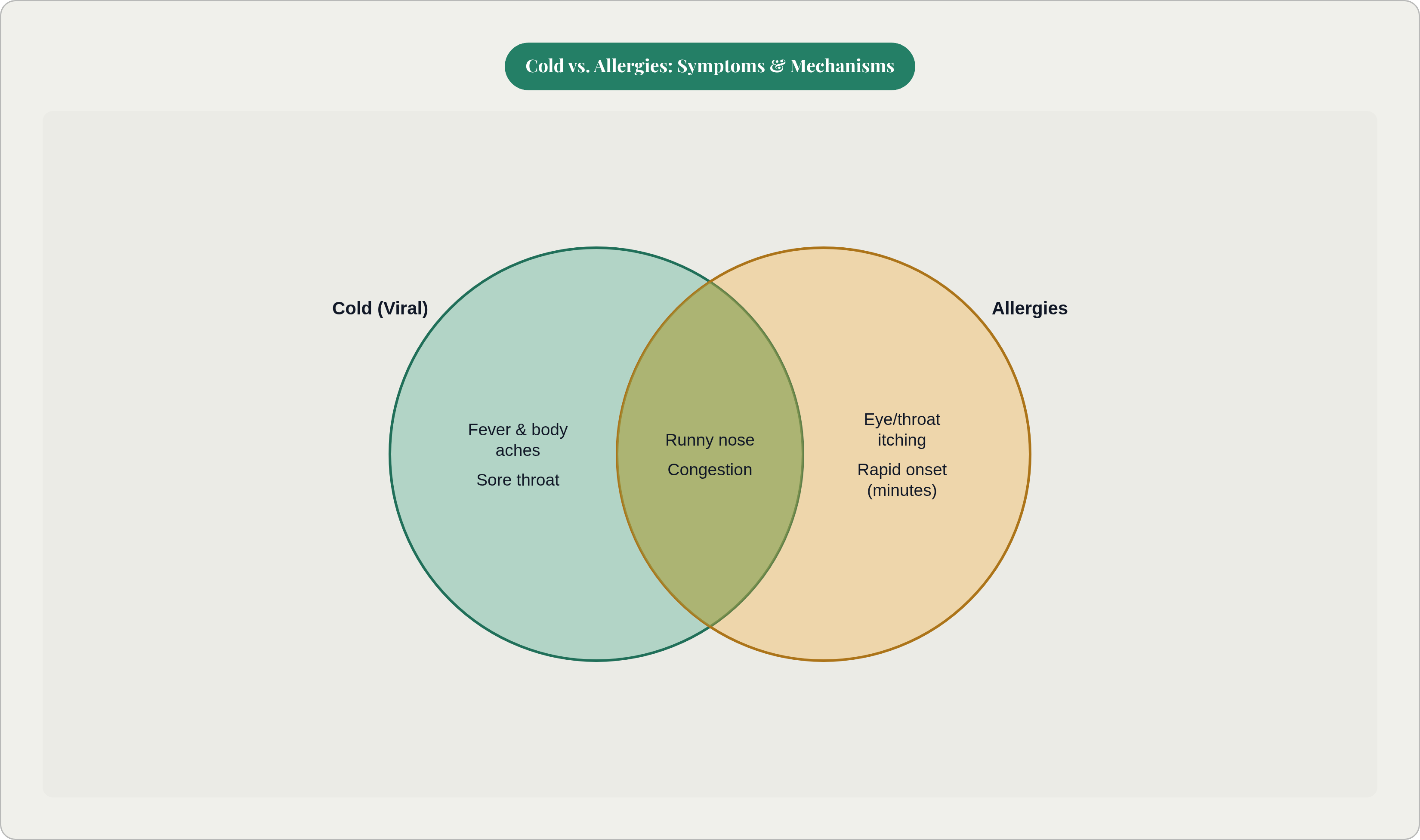
The overlap is real, not imagined. Runny nose, congestion, sneezing, fatigue: neither condition owns any of those. Which is precisely why so many people spend years misreading what's happening to them.
But some symptoms are reliable indicators once you know what you're looking at. Fever is rarely allergies; it's a signature of viral infection. Body aches and sore throat belong to the same category, the immune system grappling with a pathogen, and they're uncommon in allergic rhinitis. A cold's mucus changes character as the infection progresses, shifting from thin and clear to thick, yellowish, greenish. A cold cough produces something. These are viral signatures.
Allergy-specific symptoms are just as distinct, though people often don't frame them that way. Itchiness, especially in the eyes, throat, or nasal passages, points most reliably to allergies. The same inflammatory response congesting your sinuses also irritates the mucous membranes in your eyes, producing that watery, red, itchy presentation that cold viruses simply don't replicate in the same way. And the timing of onset is the sharpest signal available: cold symptoms develop gradually over days; allergy symptoms arrive within minutes of contact with a trigger. A virus cannot produce that pattern.
Duration is often the variable that finally tips people off. Colds resolve in three to fourteen days. Something persisting beyond two weeks without fever is very likely not a cold. And a "cold" that shows up on the same schedule every spring or fall is a calendar pattern, not a coincidence.
A rough sorting key: fever and body aches point toward viral infection; itching and rapid onset point toward allergies; symptoms tied to specific places, seasons, or exposures point toward allergies; resolution within two weeks suggests a cold.
How Seasonal Timing and Specific Environments Help Pinpoint the Trigger
Outdoor allergens follow a calendar consistent enough to be diagnostically useful on its own. Tree pollen dominates in spring, and with warmer winters in recent years, some providers are seeing symptoms push as early as February. Grass pollen peaks late spring into early summer. Ragweed takes over late summer and fall. If your symptoms flare on high-pollen days, calm down when you move inside, or worsen in wind and briefly improve after rain, outdoor pollen is where you start looking.
Indoor allergens are more insidious because they don't announce a season. Dust mites are among the most prevalent indoor allergens in any age group, according to Quest Diagnostics national lab data; they thrive in bedding and upholstered furniture, which is why symptoms are often worst in the morning, right after eight hours with your face near the source. Mold proliferates in damp basements and bathrooms. Pet dander, more precisely the proteins in saliva, skin, and urine, is persistent enough that cat allergen has been detected in homes without cats. Cockroach allergens are present in an estimated 68% of U.S. households, with concentrations highest in urban environments.
There's a particular trap in winter. Windows close, furnaces run, time indoors increases, and perennial allergens concentrate. What reads as a string of winter colds is often just dust mites and mold accumulating in sealed spaces. The pattern isn't random, even when it looks nothing like a conventional allergy season.
A few questions can clarify the picture before any formal testing: Do symptoms ease on vacation? Worsen in one room more than others? Return at the same time each year? Those answers narrow the likely trigger substantially, and asking them costs nothing.
What Untreated Allergies Do Beyond the Nose
This is where misidentification starts costing people in ways they rarely connect back to allergies.
Nasal congestion worsens at night. Inflamed tissue restricts airflow; the body shifts to mouth breathing; sleep architecture fragments. Research cited by the Sleep Foundation links untreated allergic rhinitis to more frequent nighttime awakenings and reduced deep sleep. Deep sleep is when the brain consolidates memory and runs its restorative processes. When that's disrupted persistently, the effects don't stay at the level of feeling groggy. They compound.
The brain fog allergy sufferers describe has several distinct physiological threads running through it. Histamine functions as a neurotransmitter that regulates alertness, and allergic inflammation disrupts that signaling directly. Chronic congestion reduces oxygen delivery to a brain that consumes roughly 20% of the body's oxygen supply despite comprising about 2% of body weight, so even modest reductions matter. Sleep deprivation from nighttime symptoms compounds both. And older antihistamines, the kind most people reach for first, add sedating effects on top of inflammation-driven fog.
Further downstream: chronic congestion creates the conditions for sinus infections by trapping mucus where bacteria proliferate. For people with asthma, allergen exposure is a known trigger for attacks, increasing both inhaler dependency and the probability of emergency intervention.
The part that goes unrecognized longest: a child who seems persistently distracted in school, an adult who can't sustain mental energy through a workday, these presentations carry undiagnosed allergy burden. The problem looks like something else entirely, because nobody traced it back to the nose.
Why Symptom-Masking Medications Leave the Problem Intact
Antihistamines block histamine receptors. They intercept part of the inflammatory cascade. They do not alter how the immune system responds to the allergen itself. The trigger is still present, the immune system still classifies it as a threat, and when the medication wears off, the response resumes exactly where it left off.
Nasal corticosteroid sprays manage local inflammation reasonably well, with less systemic burden than older antihistamines. Same limitation: the immune trigger is untouched.
The side-effect burden of these medications is real and consistently underestimated. First-generation antihistamines carry sedating effects documented as severe enough to impair driving and operating machinery. Antihistamine nasal sprays like azelastine can cause dizziness, drowsiness, and a persistent bitter aftertaste regardless of when you take them. Some of these effects layer directly onto the cognitive symptoms the person is already experiencing from the allergies themselves.
What this creates is a predictable cycle. Symptoms return when medication wears off, when pollen counts spike, when exposure intensifies. Another tablet. Fewer than 5% of allergy sufferers in the United States are receiving allergen immunotherapy, the only treatment class that actually retrains the immune response, despite a well-established evidence base supporting it. The medication cycle is the default not because it's the best option, but because most people don't know another one exists.
What Immunotherapy Does That Medications Cannot
Allergen immunotherapy works on the mechanism, not the symptom. By exposing the immune system to gradually increasing amounts of the allergen, the treatment retrains it to stop classifying the substance as a threat. The clinical term is tolerance: a fundamentally different immune reaction to the same trigger, not a managed or suppressed version of the same reaction.
Two delivery formats have meaningful evidence behind them. Subcutaneous immunotherapy, allergy shots, has the longer clinical track record and requires regular clinic visits through a build-up phase before moving to maintenance dosing. Effective, but logistically demanding, which is not a small consideration for people with difficult schedules or limited access to allergy specialists. Sublingual immunotherapy, drops or FDA-approved tablets placed under the tongue, operates on a comparable mechanism with a comparable evidence base, and can be taken at home.
Sublingual immunotherapy is personalized to the patient's specific sensitization profile. What you're actually reacting to, whether dust mites, tree pollen, pet dander, or some combination, determines what goes into the treatment. Accurate allergen identification isn't just interesting information; it's the clinical foundation on which an effective treatment is built.
How to Tell If Professional Testing Is the Right Next Step
A few patterns, taken together, suggest that another season of waiting is probably the wrong call.
Symptoms that recur at the same time each year. Symptoms lasting beyond two weeks without fever. Symptoms that shift in intensity based on location or environment. Fatigue, morning grogginess, or difficulty concentrating during episodes that have been labeled colds. Over-the-counter medications that work partially and briefly but require constant repetition to maintain. Any one of these is suggestive; several together are hard to explain away.
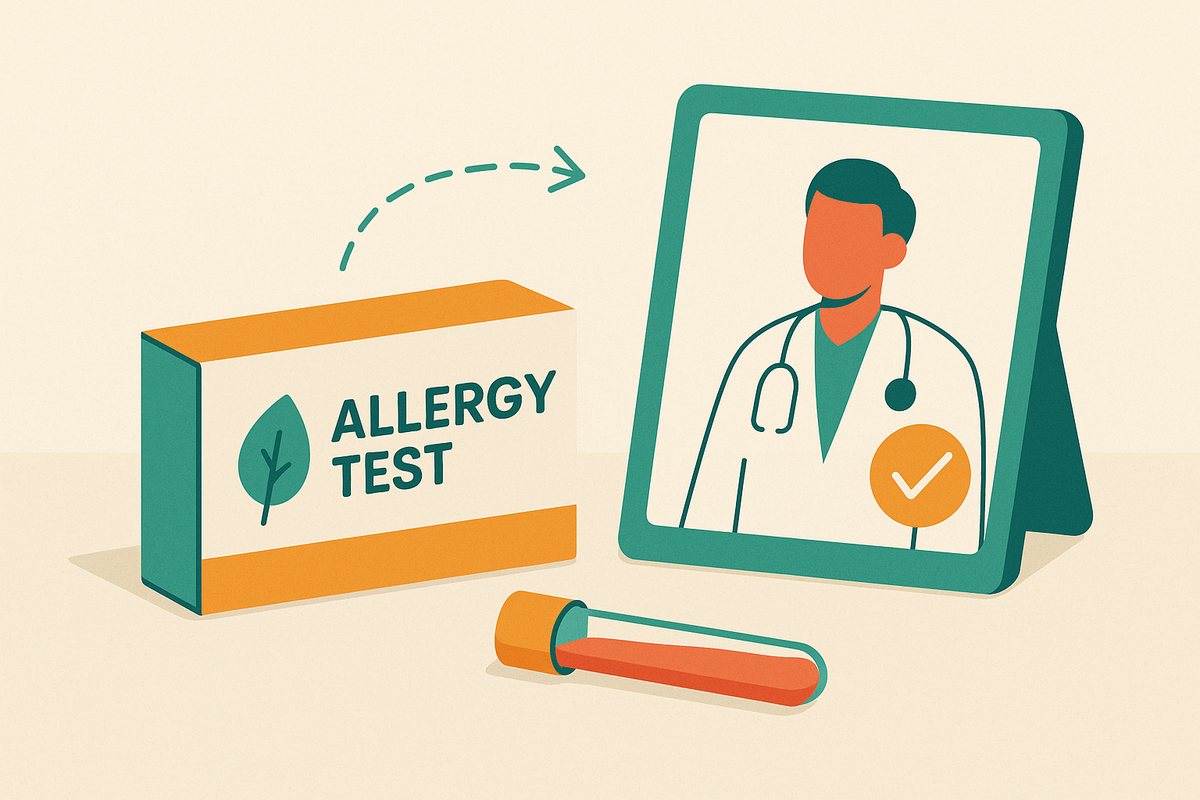
What testing establishes is not just confirmation that allergies are present. It identifies which specific allergens are driving the immune response, and that specificity is the prerequisite for building a treatment that addresses the actual problem rather than a generic approximation of it. At-home allergy testing in the finger-prick format removes most of the friction from this step: no clinic appointment, no referral, no waiting room.
The practical choice here is not hard to describe, even if it takes a few bad seasons to arrive at it. Reaching for another antihistamine manages one more cycle. Identifying the correct condition and applying a treatment designed for it is what moves the situation somewhere different.