Hay Fever Symptoms vs Allergic Rhinitis Diagnosis
Missing the brain fog hides half the problem—and why diagnosis matters more than the pharmacy aisle.
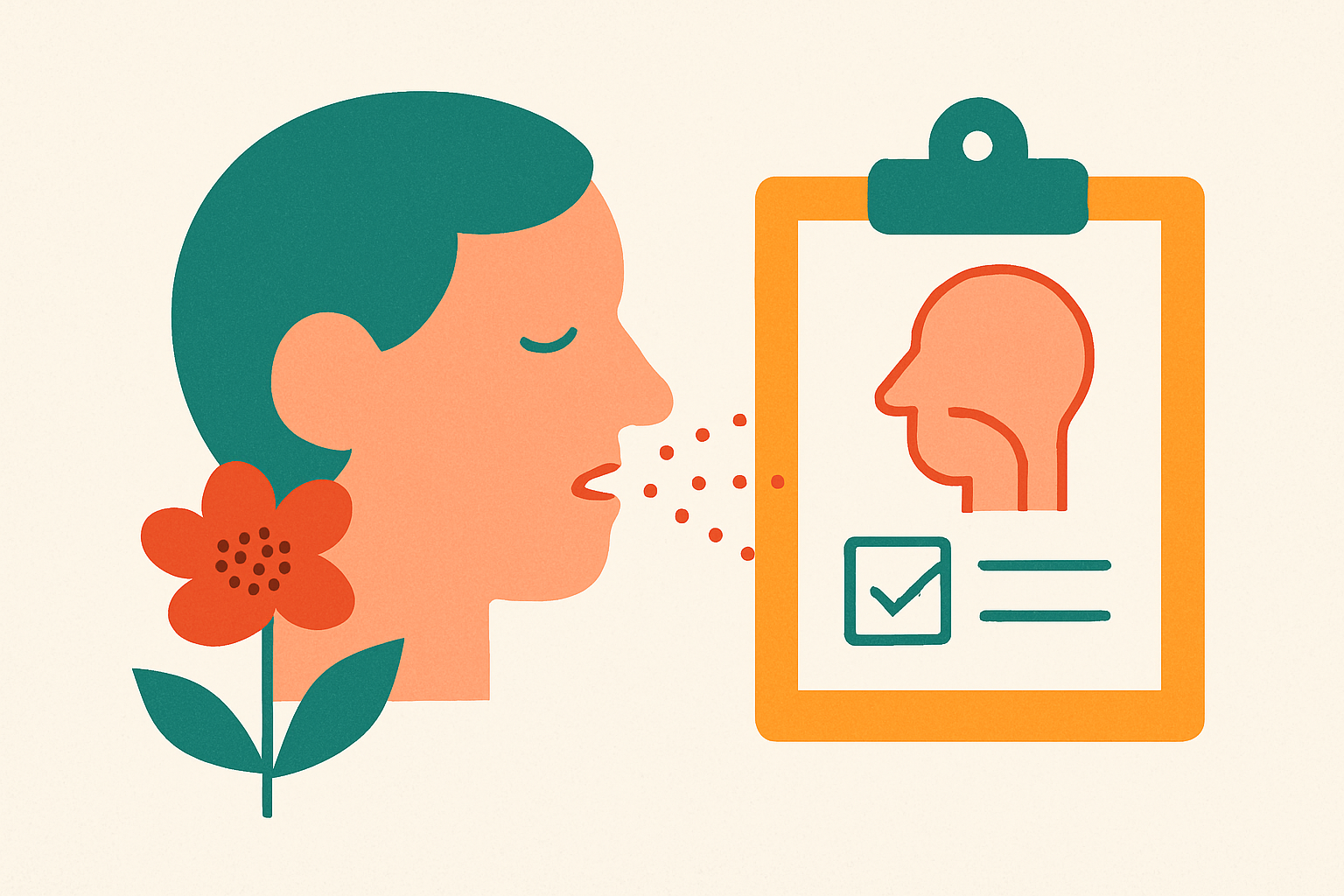
Hay fever is what most people call it. Allergic rhinitis is what a doctor writes down, and that gap between the two names is doing a lot of quiet damage. One label sends you to the pharmacy aisle. The other opens the door to testing, classification, and treatment that actually changes the disease. In 2021, roughly 81 million people carried a diagnosis of seasonal allergic rhinitis, about 26% of adults and 19% of children, according to AAFA's Allergy Facts and Figures (updated April 2025). Most of them probably still call it "spring allergies," a mistake worth unpacking.
The hallmark symptoms most people recognize, and the ones they routinely miss
Sneezing. Runny nose. Stuffed-up sinuses. Itchy, watery eyes. Postnasal drip that has you clearing your throat forty times a day. That's the cluster everyone points to when they say "hay fever," the loudest, most immediate part of the reaction and so the part that gets noticed.
A second layer of symptoms almost never gets connected to allergies at all, a layer worth taking seriously. Fatigue. Brain fog. Waking up groggy no matter how many hours you slept. Mouth breathing that gets blamed on a deviated septum or "just how I sleep." In kids, this shows up as irritability or trouble focusing in school, sometimes mistaken for attention issues that have nothing to do with a stuffy nose.
Why would sneezing and brain fog share a root cause? Histamine. When IgE antibodies trigger histamine release, histamine doesn't just swell nasal tissue and set off sneezing. It also acts as a neurotransmitter that regulates alertness and sleep. One molecule, two jobs. That's the thread connecting a stuffy nose to a foggy head, and it's why treating the sneeze without treating the sensitization behind it leaves half the problem standing.
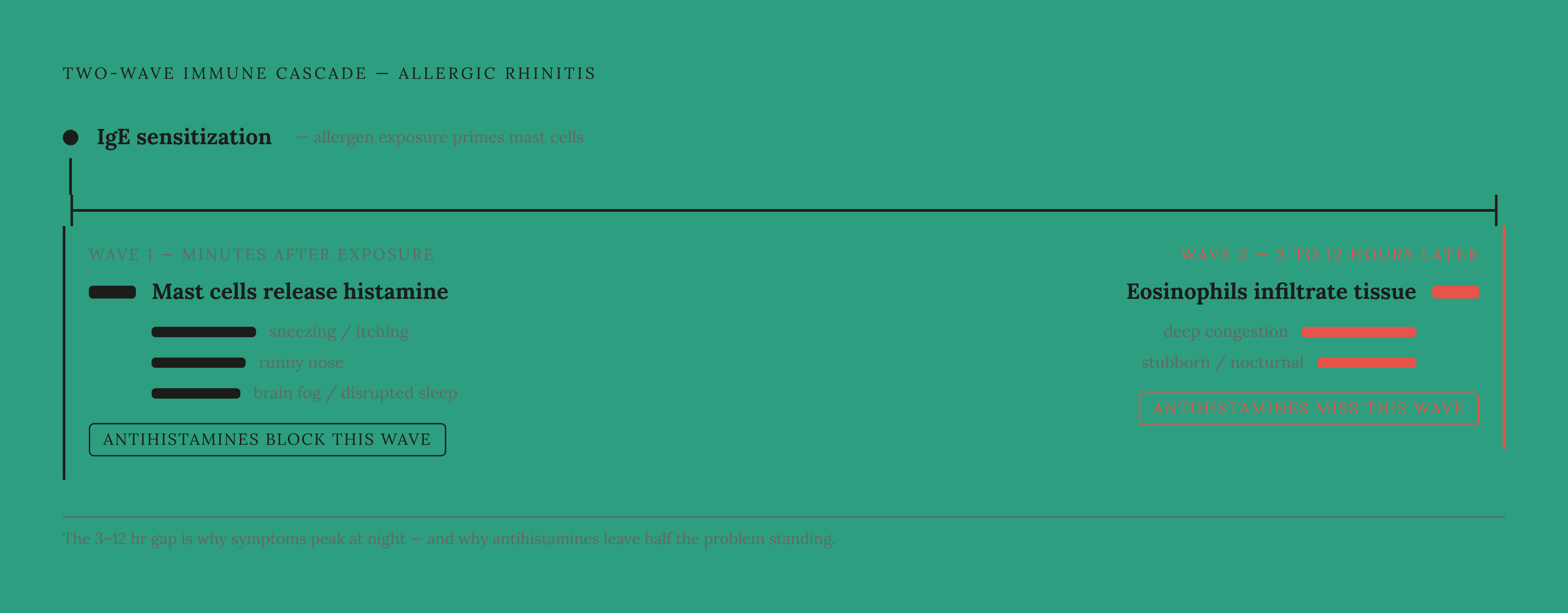
Timing plays a role too. The immediate reaction, the sneeze-itch-runny nose combo, hits within minutes of exposure. A second wave follows: the late-phase reaction, arriving hours later, bringing progressive nasal blockage and swelling. That's why symptoms often feel worse by evening or in the middle of the night. Someone tracking only the sneezing misses this delayed surge and writes off the 2 a.m. congestion as something else entirely.
The cost of missing that second layer is time. If fatigue and brain fog never register as allergy symptoms, people just keep tolerating them instead of asking why they're happening.
How the immune system turns harmless particles into a chronic problem
Pollen, dust, pet dander. None of it carries any danger. In a sensitized immune system, though, it triggers a cascade as if it were.
Here's roughly how it works. Exposure to an allergen prompts the body to produce IgE antibodies specific to that allergen. Those antibodies attach to mast cells sitting near the nasal lining. On the next exposure, IgE binds the allergen and signals those mast cells to dump histamine and other inflammatory chemicals into the surrounding tissue. That's the sneezing, the itching, the swelling, the mucus, all within minutes.
Histamine also plays that neurotransmitter role, disrupting sleep and alertness on top of the physical symptoms. One trigger, two systems affected.
Then the late-phase reaction kicks in. Between 3 and 12 hours after the initial exposure, eosinophils and basophils move into nasal tissue, producing a deeper, more stubborn congestion, the kind antihistamines barely touch. That's why mornings and nights often feel worse than the moment of exposure itself.
Left alone long enough, this loop raises the risk of chronic sinusitis, nasal polyps, and serous otitis media (fluid buildup in the middle ear). Immunotherapy has been shown to lower the risk of allergic rhinitis progressing into asthma, and that's worth sitting with, because the stakes here go past comfort.
The upstream-versus-downstream distinction is the one to hold onto. Antihistamines and nasal sprays work downstream, blocking or reducing histamine's effects after the cascade has already fired. They never touch the IgE sensitization that starts the whole thing. That gap is the crux of the treatment conversation later on, the reason so many people stay stuck on medication built only to manage symptoms rather than fix the cause.
What triggers determine: seasonal vs. perennial allergic rhinitis, and why the distinction shapes the entire diagnosis
Not all allergic rhinitis runs on the same clock. Seasonal allergic rhinitis follows outdoor allergens with defined bloom windows: tree pollen in spring, grass pollen from late spring through summer, weed pollen (ragweed, for instance) from late summer into early fall, and mold spores that spike during damp stretches. Pollen calendars shift by region, so "spring allergies" in one warmer southern city and "spring allergies" in one colder northern city aren't hitting on the same weeks.
Perennial allergic rhinitis tracks indoor allergens present all year instead. Dust mites are probably the most common culprit, with a large share of allergy sufferers sensitized to them. Pet dander gets misunderstood constantly, since the trouble comes from proteins found in skin flakes, saliva, and urine rather than the fur itself. It's proteins from skin oil glands and dried saliva, both of which stay airborne and linger long after the pet leaves the room. Cockroach allergen and indoor mold (thriving in basements, bathrooms, anywhere water sits) round out the list.
Plenty of people have both, and this is where a lot of self-diagnosis goes wrong. Someone who sneezes every March and also wakes up congested every January is probably managing two separate sensitizations, not one long, drawn-out condition. That distinction rarely surfaces from an over-the-counter antihistamine. It surfaces from testing, full stop.
Why does this matter beyond labeling? Trigger identity decides what gets tested for, what avoidance steps are realistic (washing bedding weekly for dust mites, keeping pets out of the bedroom), and which specific antigens would need to go into an immunotherapy plan, if that path becomes relevant later.
How clinicians formally diagnose allergic rhinitis, and what happens beyond symptom recognition
A diagnosis starts with a conversation, not a needle. Clinicians ask about timing (every day, or only certain months), duration, known triggers, and whether asthma, eczema, or recurrent sinus infections show up in the same patient's history.
From there, severity gets classified using the ARIA framework (Allergic Rhinitis and its Impact on Asthma), the system most clinics lean on. It splits allergic rhinitis along two axes: mild versus moderate-severe, based on how much symptoms disrupt sleep, work, school, or daily activity, and intermittent versus persistent, based on how often and how long symptoms show up across the year. That's not just "do you have allergies." It's "how much is this actually costing you," and the answer shapes how aggressively a clinician treats it.
Testing comes next, to confirm sensitization. Skin prick testing is still the traditional in-office method: small amounts of allergen extract go under the skin, and a wheal-and-flare response (that raised, itchy bump) gets measured. Specific IgE blood testing offers an alternative when skin testing isn't practical, measuring allergen-specific IgE directly from a blood sample. More recently, at-home finger-prick kits offered through telehealth platforms use the same IgE-based science, mailed in and reviewed by a physician remotely.
What does testing add that symptom history can't? It pinpoints exactly which allergens are driving the reaction, and it often turns up multiple triggers in someone who assumed they only had one. That allergen profile becomes the foundation for any immunotherapy plan down the line.
One caveat worth sitting with: a positive test result without matching symptoms isn't a diagnosis on its own. Clinical correlation, meaning the symptom timing lines up with the allergen's season or exposure pattern, has to be part of the picture too.
The health consequences of leaving allergic rhinitis unclassified and untreated
Sleep is usually the first casualty, the one people underrate the most. Nasal congestion worsens overnight, restricted airflow pushes people into mouth breathing, and sleep fragments as a result. People with untreated allergic rhinitis are known to experience more frequent nighttime awakenings and less deep sleep than those without it.
From there the effects cascade, and it's a loop, not a straight line. Reduced oxygen flow from congestion, disrupted sleep, and ongoing cytokine signaling from inflammation all chip away at cognitive function. Mold allergies in particular tend to drive prolonged inflammation, which makes mental clarity even harder to hold onto. Poor sleep leads to fatigue, fatigue makes concentration harder, reduced focus adds stress, and stress leaves the body less resilient against the inflammation driving all of it in the first place.
Kids carry a specific version of this risk that gets misread constantly. A child who seems distracted or unfocused in class might just be exhausted from congestion keeping them up half the night, a cause a behavioral label misses completely.
Left unmanaged long enough, allergic rhinitis raises the risk of chronic hyperplastic sinusitis, nasal polyps, serous otitis media, and progression to asthma. AAFA estimates the annual economic cost of allergies at roughly $34 billion in 2025 dollars, a figure built from healthcare spending and lost productivity, not from what treatment itself costs.
Why symptom-masking medications fall short of a formal diagnosis's full promise
Antihistamines and nasal corticosteroid sprays work on the downstream chemicals, histamine and the inflammation it causes, but they never touch the IgE sensitization that starts the reaction. That's the ceiling built into how these medications work, and no amount of consistent use raises it.
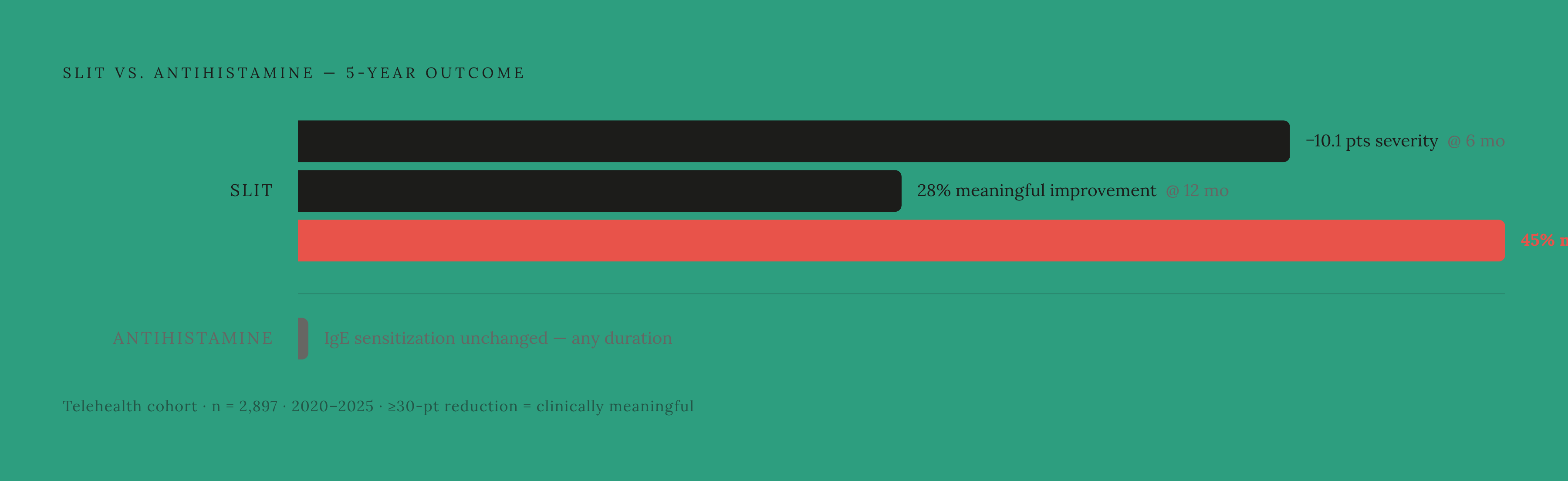
Practically, that ceiling shows up as a treadmill. Medication has to be taken continuously through an exposure period, symptoms return the moment it stops, and there's no benefit that builds up over years of use. Ten years of a daily antihistamine leaves the underlying sensitization exactly where it started. Symptom control is not the same thing as progress, no matter how many years you put into it.
There's a real cost to that treadmill too. Sedating antihistamines dull alertness, compounding the brain fog allergies already cause. Non-sedating versions dodge that particular side effect but still leave the root sensitization untouched. A literature review by Malaya et al. flagged medication adherence in allergic disease as a recognized clinical problem, and that tracks: when managing symptoms means an indefinite daily habit, adherence becomes the whole game, and people slip.
This is the gap a formal diagnosis actually closes. A self-applied "hay fever" label sends someone to the pharmacy aisle. A formal allergic rhinitis diagnosis, complete with severity classification and a confirmed trigger profile, opens a different conversation: immunotherapy.
What a formal diagnosis unlocks: allergen immunotherapy as the only disease-modifying treatment
Allergen-specific immunotherapy, AIT, stands apart because it changes the disease itself instead of muting its symptoms. Research frames it as immune reprogramming, not suppression, and that distinction is the whole reason it belongs in a different category than antihistamines.
Two delivery methods exist. Subcutaneous immunotherapy, better known as allergy shots, involves injections given in-clinic with observation afterward, typically regularly during the build-up phase. Sublingual immunotherapy, SLIT, delivers the allergen under the tongue daily, with the first dose supervised by a doctor and every dose after that taken at home.
How does SLIT actually change the immune response? Allergen absorbed through the tissue under the tongue gets picked up by T-cells. With repeated exposure over time, antibody production shifts away from the allergy-driving IgE pathway. The immune system gets retrained to stop overreacting, and that retraining is the part antihistamines can never touch.
The evidence backing this is hard to wave off. A Cochrane review from 2010, covering 60 randomized controlled trials, found SLIT reduced symptom scores (a standardized mean difference of -0.49) and medication use (SMD -0.32) against placebo, with no severe systemic reactions across the included trials. A more recent umbrella review, published in the European Archives of Oto-Rhino-Laryngology in September 2025, pulled together 20 systematic reviews and meta-analyses, all rated low risk of bias, and found consistently favorable SLIT results for both symptom scores and medication use in allergic rhinitis. A real-world telehealth cohort spanning 2020 to 2025, with 2,897 patients, showed symptom severity drop by 10.1 points at six months, with the share hitting a clinically meaningful improvement (a 30-point or greater reduction) climbing from 28% at 12 months to 45% at 24 months. Patients starting with more severe symptoms responded faster, with a hazard ratio of 2.95.
Four SLIT tablets currently carry approval from a national drug regulator: Odactra for house dust mite, Grastek for Timothy grass, Oralair for a five-grass mix, and Ragwitek for short ragweed, all indicated for ages 5 to 65. Treatment runs 3 to 5 years to build lasting immune tolerance, though plenty of patients notice a difference within the first few months, well before the full course is done.
There's a preventive angle too, one no symptom-masking medication can claim. Immunotherapy has been shown to lower the risk of allergic rhinitis progressing into asthma. Telehealth has chipped away at the biggest practical barrier here: physician-guided SLIT programs, run through virtual consultation with dosing done at home, remove the weekly in-clinic visits that used to price a lot of people out of this option entirely.
Closing the gap in practice: what to do once you suspect your symptoms are more than seasonal sneezing
Start by paying attention to patterns. Is this happening year-round or only certain months? Are there known exposures: pets, dusty rooms, a damp basement? Is an over-the-counter antihistamine something taken daily just to function, rather than once in a while when pollen spikes? Writing these patterns down before a consultation gives a clinician something concrete to work from, and it's a five-minute exercise most people skip.
Testing is the bridge between suspicion and an actual plan. Without knowing which allergens are driving sensitization, severity classification stays incomplete and immunotherapy can't be personalized. At-home IgE testing through telehealth platforms has removed a lot of the friction here: a finger-prick sample, mailed in, can generate the allergen profile a physician needs to move forward.
A virtual allergy consultation typically covers symptom history, trigger identification, severity classification, interpretation of test results, and a conversation about whether SLIT, in drop form or one of the FDA-approved tablets, makes sense as a next step. FSA and HSA funds usually apply toward allergy testing and immunotherapy, and telehealth plans with clear monthly pricing often land in a similar cost range to years of ongoing over-the-counter spending, minus the ceiling that comes with symptom-masking alone.
"Hay fever" is a fine starting point. It's the first clue, the thing that gets someone to pay attention in the first place. But the formal diagnosis, the trigger profile, the severity classification, is what actually opens the door to lasting relief instead of another decade of antihistamines and hoping for a lighter pollen season.
Sources
- Efficacy and safety of Sublingual immunotherapy for allergic rhinitis: an overview of systematic reviews and meta analyses | European Archives of Oto-Rhino-Laryngology | Springer Nature Link
- Real-world outcomes of personalized sublingual immunotherapy for environmental allergies delivered through a telemedicine platform: a retrospective longitudinal cohort study - PMC
- Allergic Rhinitis (Hay Fever)
- Nasal Allergies (Rhinitis)
- acaai.org
- merckmanuals.com
- aafp.org
- health.harvard.edu