Seasonal Allergy Symptoms by Body System
Allergic reactions ripple through your eyes, lungs, skin, and gut, not just your nose.
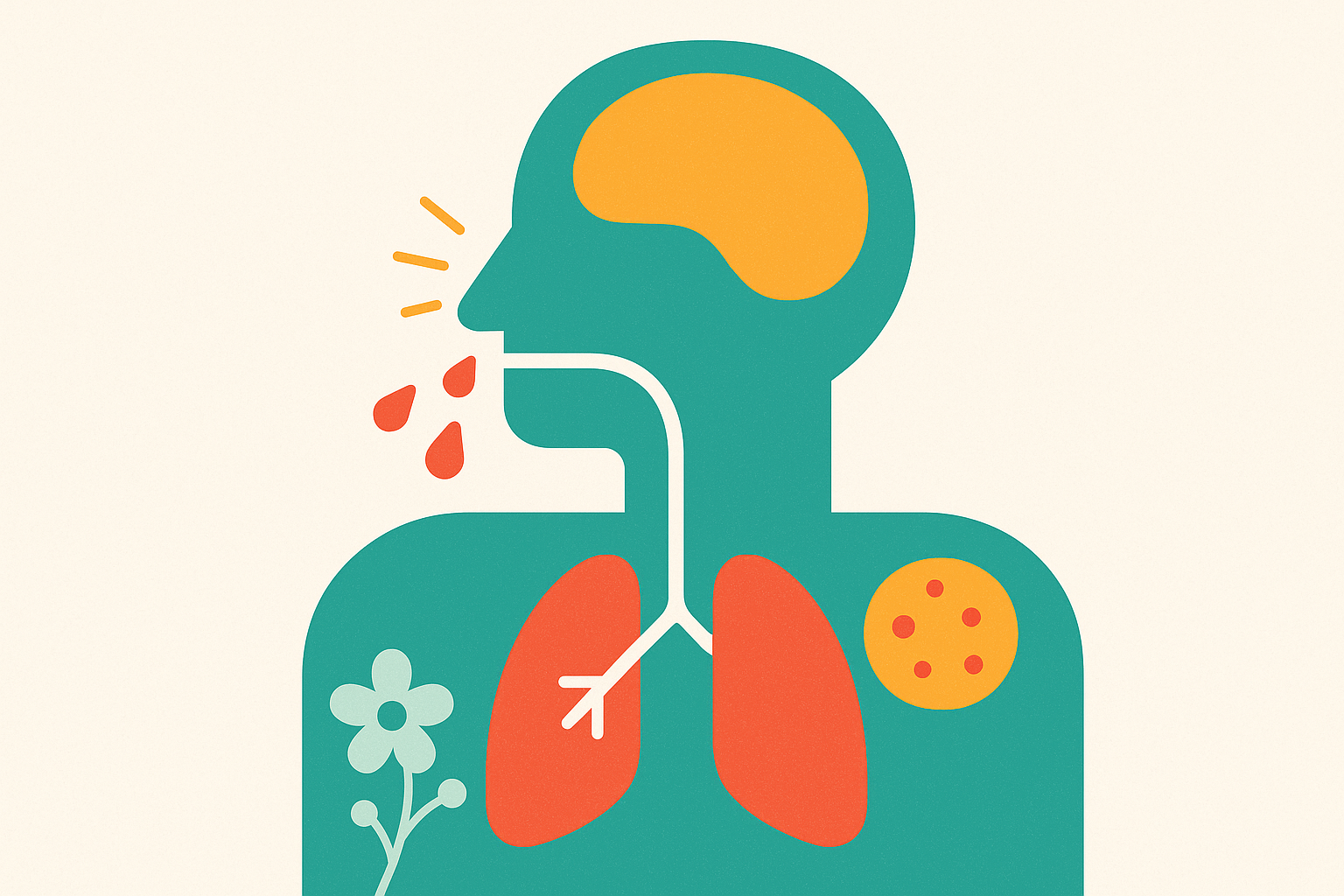
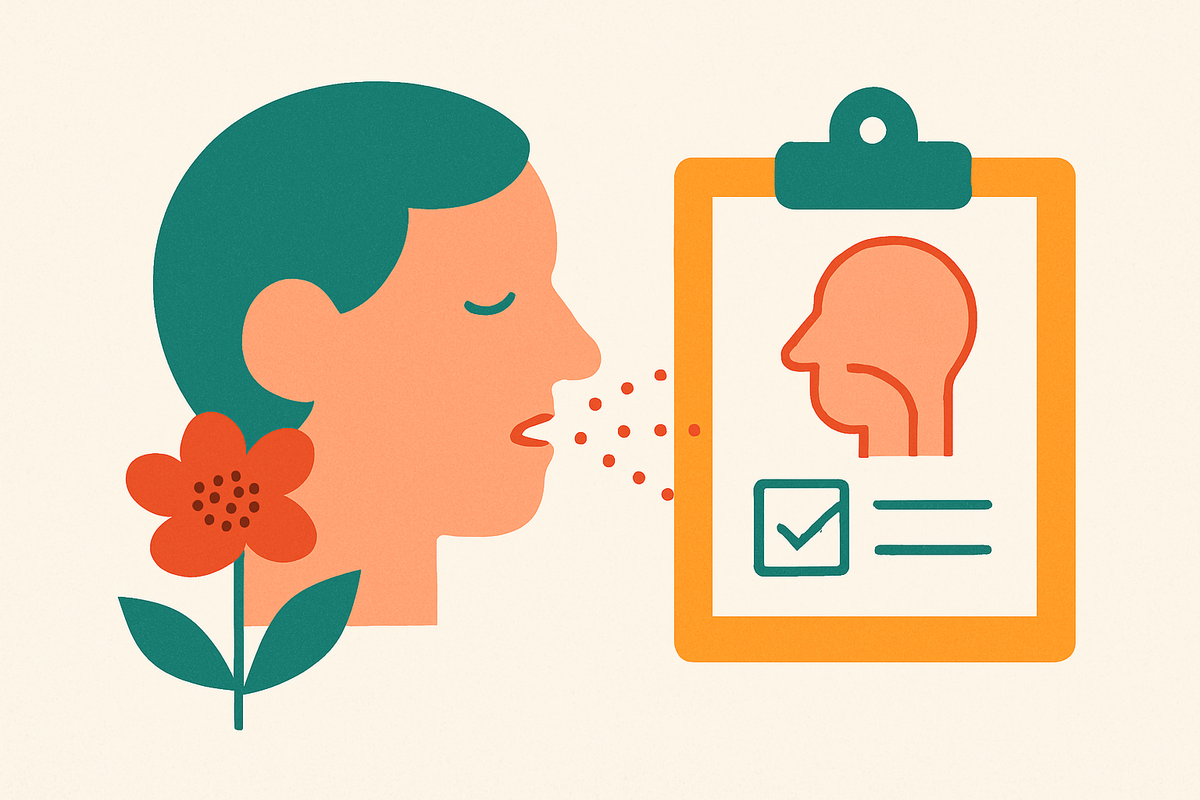
About one in four adults in the country carries a diagnosed seasonal allergy, and allergic rhinitis alone reaches up to 30% of adults and 40% of kids. Most people still picture "allergies" as a nose problem: sneezing, a runny nose, itchy eyes. That picture is wrong, or at least badly incomplete. The immune reaction behind hay fever moves through the eyes, lungs, skin, gut, and brain, producing symptoms that plenty of sufferers file under some other, unrelated complaint.
What's actually happening in the immune system when pollen enters the picture
Calling an allergy a "sensitivity" undersells it, and that soft framing is part of why so many people never connect their symptoms to pollen in the first place. An allergy is an IgE-mediated overreaction. The immune system decides pollen is dangerous and mounts a defense against it, the same way it would against a virus.
The sequence goes like this. Pollen lands on a mucous membrane, and immune cells respond by producing IgE antibodies specific to that allergen. Those antibodies attach to mast cells, which sit in tissues all over the body, not just the nose. When the allergen shows up again, it binds to the IgE on those mast cells, and the mast cells burst open, releasing histamine and a handful of other inflammatory chemicals.
Histamine does most of the damage people actually notice. It widens blood vessels, ramps up mucus production, irritates nerve endings, and tightens smooth muscle, the muscle lining the airways and gut. Mast cells live throughout the body's tissues, so there's no real reason to expect the reaction to stay confined to one location. Research published in PMC (PMC6156899, 2018) pushes back on the old idea that allergic rhinitis is a localized nasal disorder, pointing instead to involvement across the whole respiratory tract. Once that clicks, the rest of the body's response stops looking like a coincidence. It's one event playing out in several places at once.
The nasal system: where the immune response is loudest and most recognized
Allergic rhinitis is what most people mean when they say "allergies." It's defined by immune-driven inflammation in the nasal lining: runny nose, sneezing fits, blockage, itching. It's loud, it's familiar, and it's usually the first thing a sufferer notices each season.
But congestion is doing more than annoying anyone. It physically blocks airflow and changes how a person breathes, which sets off effects covered later in this piece. Sinuses swell too, and that pressure can turn into headaches or, in some cases, a full sinus infection. Kids get an added complication: allergy-driven nasal congestion can contribute to ear infections, a link a lot of parents never make because the two symptoms show up in different parts of the body at different times.
Clinicians have an actual physical marker for this. Per Merck Manuals, the nasal lining in someone with active allergic rhinitis can look swollen and discolored, running from bright red to purple. So nasal symptoms aren't just the most obvious signal, they're the start of a chain: congestion forces mouth breathing, mouth breathing disrupts sleep, and disrupted sleep shows up later as the brain fog covered further down.
The eyes: allergic conjunctivitis as a distinct condition most sufferers fold into "hay fever"
Allergic conjunctivitis, inflammation of the membrane covering the eyelids and the whites of the eyes, gets lumped into "hay fever" as if it's a side effect of a stuffy nose. Treating it that way is a mistake. It's its own condition, with its own mechanism, and for plenty of sufferers it's the most physically uncomfortable part of the whole season: itching, tearing, redness, a burning feeling, eyelids swollen enough to notice in the mirror.
Part of what makes it distinct is how it happens. Pollen and mold spores land directly on the eye's surface, making this largely a local reaction rather than one traveling through the bloodstream. It's a local contact reaction too. Anyone wearing contact lenses gets hit harder, since the lens sits directly on the eye's surface and can worsen the local allergic reaction.
Eye involvement is a hallmark of classic hay fever cases, while people whose triggers are mostly indoor tend to report eye symptoms as a less prominent part of their overall reaction. Eyes and nose flare at the same time, so most people treat the combination as a single problem. If each responds to different care, that habit is worth breaking.
The lungs: when seasonal allergies cross into the lower respiratory tract
Plenty of people with hay fever also have asthma, and for them, the same pollen triggering a runny nose can trigger an asthma attack. Wheezing, shortness of breath, chest tightness, a cough that won't quit, these get chalked up to a lingering cold or just being out of shape. Allergy season rarely gets blamed, and that's backwards.
It should be the first suspect, not the last. Allergic rhinitis, conjunctivitis, and asthma exacerbation often trace back to the same trigger because the airway behaves as one continuous system, not separate zones with separate rules. Inflammation in the nose and inflammation in the bronchial tubes are two expressions of the same immune signal, not unrelated events. That's why someone might notice they can't run as far in May as they could in January and chalk it up to lost fitness, when what's actually happening is allergy-driven bronchospasm narrowing the airway during exertion.
Not everyone with allergic rhinitis develops lower respiratory symptoms. But the risk runs meaningfully higher in that group than in the general population, so wheezing or exercise-related breathlessness tracking with a specific time of year should send someone toward allergy testing first, not third, after a chest x-ray and an inhaler that half-works.
The skin: eczema, hives, and the atopic march that links rashes to respiratory allergies
Eczema and respiratory allergies travel together often enough that dermatologists have a name for the pattern. The 2024 NHIS put eczema diagnoses at 7.7% of the country's adult population, and having one condition doesn't rule out the other. They frequently overlap in the same person.
The "atopic march" describes a progression seen often: eczema shows up in early childhood, and allergic rhinitis or asthma follows later. It's one underlying immune tendency showing up in different tissues as a person ages, not three separate diagnoses that happen to arrive in sequence.
During peak pollen weeks, existing eczema can flare, because the same systemic histamine release causing nasal symptoms also sensitizes the skin. Hives are a separate, more acute allergic response, but they're another skin signal pointing to the same activated immune system. Severity spans a wide range, from a patch of itchy skin to, in rare cases, symptoms edging toward anaphylaxis (an unusual endpoint for environmental allergens specifically). Treating a flare with a steroid cream while ignoring the allergic sensitization underneath manages the visible piece of the condition. It does nothing for the condition itself.
The gut: the less-discussed link between pollen season and gastrointestinal symptoms
Bloating, stomach discomfort, nausea, changes in bowel habits: plenty of people get these every spring or fall and never once connect them to pollen count. That disconnect doesn't hold up once you look at what the gut is actually made of. It's packed with mast cells, the same cell type releasing histamine in the nose and lungs.
A study published in May 2025 in Frontiers in Allergy (doi: 10.3389/falgy.2025.1568595), run by researchers at the University of Pavia, enrolled 61 IBS patients with a median age of 34. It found 62.8% fell into the IBS-diarrhea subtype, and atopy showed up commonly within that subgroup, especially alongside respiratory allergy symptoms. The researchers were specifically looking at whether inhalant allergen exposure makes intestinal symptoms worse during pollen season.
This isn't settled science, and it's not a claim that every case of IBS traces back to allergies. A seasonal pattern in gut symptoms deserves a second look, though, rather than a shrug and a separate diagnosis.
The brain: fatigue, fog, and the neurological toll of a body in constant immune activation
Cognitive symptoms during allergy season come from two separate pathways, and conflating them misses the point. The first is direct: histamine released during an allergic response is linked to fatigue and mental dulling that can occur independent of sleep disruption. The second runs through the nose: congestion forces mouth breathing, mouth breathing disrupts sleep, and disrupted sleep produces next-day fog, trouble concentrating, and a shorter fuse.
Nighttime congestion fragments sleep architecture, raises the odds of snoring and mouth breathing, and in some cases contributes to obstructive sleep apnea. The relationship runs both directions. Research in PMC has linked OSA to both the development and severity of allergic rhinitis, so poor sleep and nasal inflammation end up feeding each other. Congestion-related airflow restriction during peak pollen weeks is associated with reduced cognitive performance.
One wrinkle deserves calling out directly: a lot of people reach for older, first-generation antihistamines, not realizing those cross into the brain and cause sedation. The treatment ends up feeding the exact cognitive burden it's supposed to relieve, which is close to the worst-case outcome for a medication. Follow the chain all the way through and a pattern emerges: immune activation leads to poor sleep, poor sleep leads to daytime fog, fog chips away at productivity, and unresolved symptoms stack into irritability and, in long-running untreated cases, depression. That's the payoff of walking through every body system here. It explains why allergy sufferers feel unwell in a broad, whole-body sense, not just stuffy.
Why pollen seasons are getting longer and the symptom burden is growing
Pollen season in the country now runs about three weeks longer on average than it did 50 years ago, according to American Lung Association research. In some places the growing season has stretched two weeks longer than it was in the 1990s and more than four weeks longer than in the 1970s. The 2026 ARIA-EAACI guidelines point to climate data showing pollen seasons averaging 21 days longer than in 1970.
Rising temperatures and higher atmospheric CO2 push plants to grow more and produce more pollen. Shifting climate patterns are also moving the geographic range and timing of airborne allergens. The American South shows this clearly: warmer winters trigger earlier tree pollen release, and longer summers stretch ragweed season further into fall. Cities like Atlanta and Houston have logged longer active pollen seasons each year since 2022, per a 2025 analysis from Hey Allergy.
A longer season isn't just a longer calendar entry. It means more weeks of disrupted sleep, more weeks of cognitive fog, more gut flare-ups, more skin flares. Someone who's managed fine under the old seasonal window might find that window expanding underneath them without much warning, and the systems that used to hold steady from March to May now have to hold from February to June.
How to connect your symptoms to a specific allergen, and why that mapping matters for treatment
Timing is the first clue, and it's a more reliable one than most people give it credit for. Symptoms that show up and fade on a predictable calendar point toward specific outdoor allergens, and each season has its own suspects.
Early spring, starting around February, points to tree pollen: oak, elm, birch, ash, olive. In the western part of the country, mountain cedar (technically a juniper) runs from December through March. Late spring into summer shifts to grass pollen, Bermuda, timothy, orchard, Johnson grass, with the arid Southwest seeing grasses pollinate over a longer stretch than other regions. Late summer through fall belongs mostly to ragweed, with sagebrush and Russian thistle adding to the load in western and arid areas. Mold spores span spring, summer, and fall, staying airborne for extended periods, and indoor mold risk climbs when indoor humidity rises too high.
Symptoms that run year-round but spike seasonally usually point to indoor and outdoor triggers layered on top of each other. Roughly 8 out of 10 people in the country are exposed to dust mites, and 6 out of 10 are exposed to cat or dog dander. Pulling one trigger out of the environment rarely fixes anything when someone is sensitized to several allergens at once, which cuts against a common instinct. Location matters too, and a pollen calendar built for Atlanta doesn't transfer to Phoenix or Seattle.
At-home finger-prick IgE testing maps out exactly which allergens someone is sensitized to, turning a vague sense of "spring is rough" into an actual list. That list is the bridge from generic symptom management to something closer to root-cause treatment. Someone who notices that March brings brain fog, August brings gut trouble, and October brings a skin flare, and traces all three back to the same immune overreaction, is in a far better position to act than someone treating each as its own mystery.
Why symptom-masking medications address none of the body systems discussed above at a root level
Antihistamines work downstream of the actual problem, and that's their central limitation, not a minor caveat. They block histamine receptors after the histamine has already been released, which dulls the symptom but does nothing to stop the IgE-mediated sensitization process producing that release in the first place. Season after season, the underlying reactivity stays exactly where it was.
First-generation antihistamines carry a specific cost worth naming again: they cross into the brain and cause sedation, stacking cognitive impairment on top of the cognitive impairment allergies already cause. Nasal corticosteroid sprays work on the inflammation itself rather than just blocking histamine receptors, which puts them a step ahead. They're still managing the nasal piece of a reaction that, as every section above shows, is never really contained to the nose.
None of this makes symptom relief pointless. Someone mid-flare needs relief now, not a research project. But relief and resolution are different goals, and mixing them up is exactly how a person ends up on the same antihistamine every March for fifteen years while the eye irritation, the gut symptoms, and the fatigue keep showing up right on schedule, treated as separate problems instead of one immune system doing what it was trained, mistakenly, to do.