Step-by-Step Allergy Diagnostic Protocol for Patients Whose Chief Complaints Are Fatigue and Brain Fog
Allergic rhinitis may drive fatigue and brain fog through inflammation and sleep disruption.
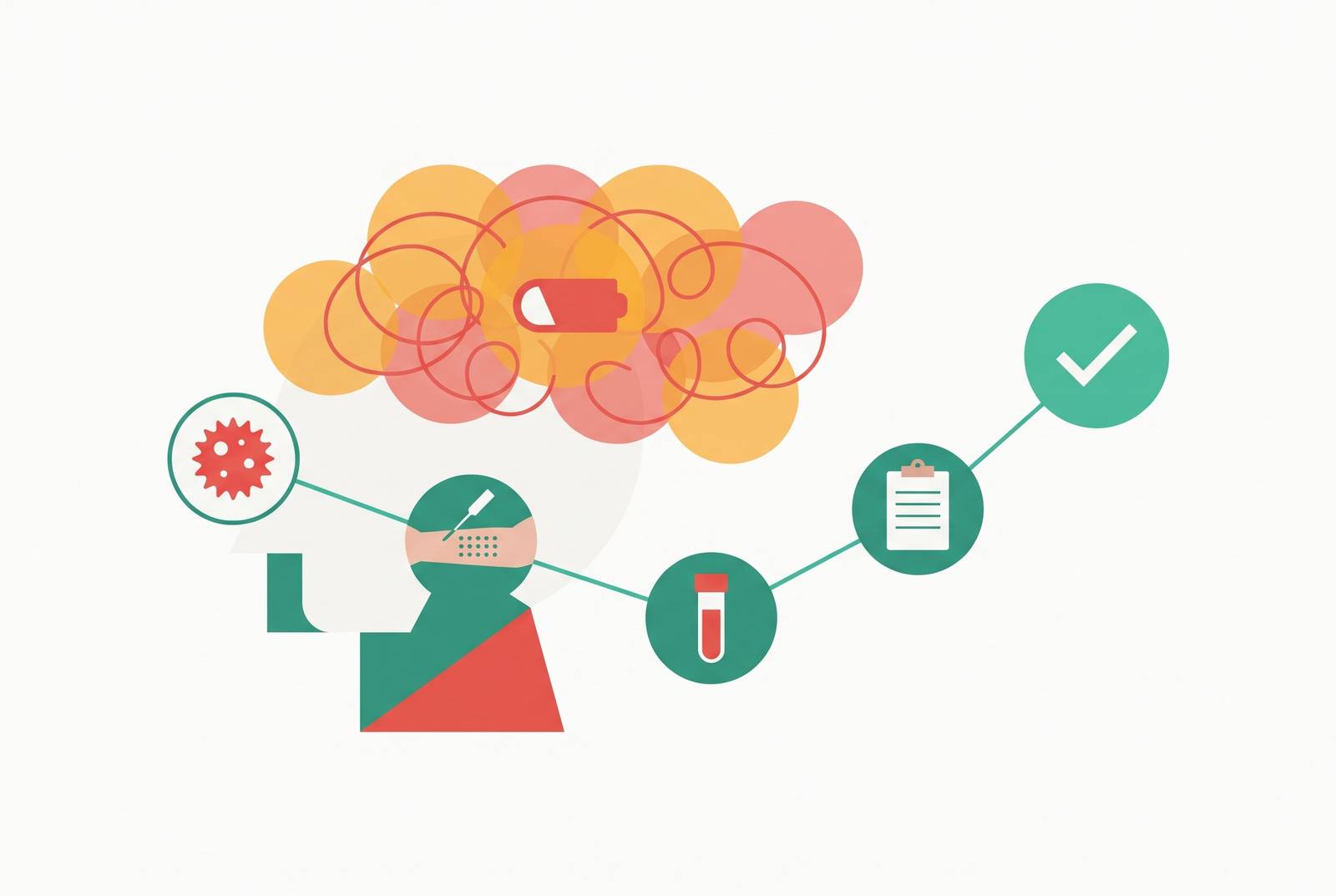
Undiagnosed allergic rhinitis can contribute to fatigue, brain fog, and poor sleep through inflammation, changes in histamine signaling, and disrupted sleep. The diagnostic path is to match symptom timing to exposure, confirm sensitization with allergen-specific testing, and assess other possible causes. A positive test alone cannot explain exhaustion, but a structured evaluation can establish whether allergies are a driver and open a path beyond symptom relief.
Why fatigue and brain fog so often go undiagnosed as allergy symptoms
You have had bloodwork, seen a therapist, tried iron supplements, and still feel foggy. What has the search missed so far? Fatigue and trouble thinking often lead to evaluations for depression, thyroid dysfunction, burnout, or long COVID before allergic rhinitis enters the discussion. Those possibilities deserve attention, but they do not rule out allergic inflammation. When exhaustion overshadows a stuffy nose, the less obvious connection can go unexplored.
“Brain fog” describes symptoms. It can mean slower thinking, trouble paying attention, lapses in working memory, or trouble finding words. UAMS Health notes that allergic rhinitis affects tens of millions of Americans and can disrupt sleep, drain energy, and impair school and work performance. These effects can be physiological consequences of inflammation. Missing that connection can leave patients with partial diagnoses and treatments that never address immune activation.
The three biological pathways that connect allergic inflammation to cognitive symptoms
The first pathway is immune signaling. During allergic inflammation, the immune system releases signaling proteins called cytokines that can cause the kind of whole-body fatigue people know from a viral illness. But when exposure to an allergen continues, the trigger may persist. That low-grade activation can lower baseline energy and make concentration harder to sustain. People can feel drained even when their nasal symptoms are mild.
The second pathway involves histamine’s two different roles. Outside the brain, histamine helps drive allergy symptoms, while inside the brain it acts as a neurotransmitter involved in wakefulness, attention, and cognition. During flares, changes in histamine activity may affect this regulation, including H3 receptors that act as a feedback brake on neurotransmitters tied to alertness. This is a possible contributor to the heavy, slowed-down feeling described as “thinking through mud.” It is not a separate diagnosis that a routine allergy test can establish.
The third pathway runs through disrupted sleep. Nasal congestion can cause brief awakenings that patients do not remember, while mouth breathing during sleep can narrow the oropharyngeal airway. A night may therefore feel uninterrupted without being restorative. Fog that is worst after congested nights, dry-mouth waking, or unrefreshed sleep points particularly toward this pathway. Sleep disruption can be the strongest contributor to next-day cognitive symptoms.
Inflammation impairs sleep, poor sleep can amplify histamine sensitivity, and disrupted histamine regulation may make inflammation harder to resolve. That creates a compounding loop. It also explains why relieving a single part of the problem may leave fatigue behind.
The medication paradox that makes brain fog worse while treating allergy symptoms
An allergy remedy can also cloud the picture. First-generation antihistamines cross the blood-brain barrier and block central histamine receptors, causing sedation, memory impairment, and slowed processing. If fog worsened after starting diphenhydramine, sold as Benadryl, the change may reflect the medication. Second-generation antihistamines, including loratadine, cetirizine, and fexofenadine, are less sedating, but some patients still experience cognitive dulling, particularly with cetirizine.
Intranasal corticosteroids remain guideline-endorsed first-line treatment for nasal congestion and do not have the same cognitive side-effect profile. Yet neither nasal steroids nor antihistamines change the underlying immune sensitization. They can control symptoms while the tendency to react remains. Finding the allergen that drives the reaction can therefore do more than help with short-term relief.
Step 1 — Recognizing the symptom pattern that points toward allergic inflammation
Patients can begin with a self-audit before an appointment. There is no laboratory marker for “allergy brain fog,” so the useful evidence begins with timing, triggers, and symptoms that occur together. Four questions can help organize that history. Does the fog worsen in spring, summer, or fall, or in particular places such as a home with pets or a building with mold? Is it worst after nights of congestion, mouth breathing, snoring, or waking with a dry mouth?
The remaining questions connect those patterns to other clues. Do sneezing, itchy or watery eyes, a runny nose, post-nasal drip, or congestion occur with the fatigue, even if they feel mild? Do symptoms improve away from the usual home or office, during a vacation in a different climate, or after time away from a family pet? The contrast between exposed and unexposed periods is useful. It gives a clinician more to work with than “tired all the time.”
A severity classification defines mild allergic rhinitis by normal sleep, no disruption to daily activities or school and work performance, and no troublesome symptoms. Sleep that is disturbed or trouble with daily tasks points toward moderate-to-severe disease, even when fatigue feels worse than sneezing.
Other explanations should still be considered in parallel. Thyroid dysfunction, anemia, mood disorders, long COVID, and sleep apnea unrelated to nasal obstruction can also cause fatigue and cognitive trouble. The self-audit does not exclude them. Its purpose is to establish whether the timeline gives allergies a plausible role before testing begins.
Step 2 — Identifying whether the trigger is perennial, seasonal, or both
Symptoms that last all year suggest testing for different allergens than fog that returns every April. Perennial allergens include house dust mites, animal dander, and indoor mold spores. The two important dust mite species are Dermatophagoides pteronyssinus and Dermatophagoides farinae, while cat and dog are commonly tested sources of dander. These exposures can persist without a seasonal break.
Seasonal symptoms point toward pollen exposure instead. Tree pollen, including oak and birch in northern regions, is usually at its highest in spring across most U.S. regions. Grass pollen in summer and weed pollen from late summer to fall give other clues based on the time of year. The likely category helps shape both the testing panel and the meaning of its results.
The categories can also overlap in one person. Perennial sensitization with seasonal peaks can produce persistent low-grade fog that becomes much worse at certain times of year. Allergies can therefore still be a cause when symptoms last through winter. The useful hypothesis may be a year-round trigger with an added seasonal burden, rather than a choice between the two.
Step 3 — Allergy testing: what the options are and how to choose between them
Skin prick testing and serum-specific IgE blood testing are the two clinically validated routes described here. Both assess sensitization to particular allergens, but they differ in setting and medication requirements. The choice depends on access, current treatment, and clinical context. Neither is a stand-alone test for cognitive impairment.
Skin prick testing is the standard in-clinic approach when an allergist is available. Results are immediate, and the panel can be tailored to regional allergens and the patient’s history. Medication preparation is the main practical constraint. Certain antihistamines must be stopped beforehand because they suppress the skin reaction and can produce false negatives. For someone taking daily antihistamines, that requirement belongs in the testing discussion so the interruption can be planned.
Serum-specific IgE testing measures allergen-specific antibodies in blood. It is not affected by antihistamine use, making it a useful choice when medication cannot safely be stopped. Available targets include dust mites, pollen mixes, mold mixes, and animal dander. A targeted panel such as the Allergic Rhinitis/Asthma Profile can assess dust mite, cat dander, dog dander, common silver birch, timothy grass, and several mold species from one blood draw. The symptom history helps determine which targets are relevant.
At-home finger-prick testing is another way to get IgE-based testing. Some telehealth programs offer at-home testing certified under clinical laboratory standards, with a doctor who reviews the results and no need for an in-person visit. A doctor still needs to compare the results with the exposure and symptom history.
A positive result establishes sensitization. An immune system can recognize an aeroallergen without that allergen causing the patient’s current symptoms. For example, a result becomes more meaningful when the relevant exposure coincides with congestion, poor sleep, and cognitive difficulty. The number alone cannot make that connection.
Step 4 — Ruling out confounders and confirming the allergy diagnosis
The confirmation standard brings together three kinds of evidence. Cognitive symptoms and fatigue should correlate with allergen exposure, allergen-specific testing should be positive, and allergy-directed treatment should improve symptoms. No single element is sufficient on its own. Together, they provide a stronger basis for attributing fatigue to allergies than either a symptom description or a laboratory result alone.
Overlapping conditions can explain why the picture is incomplete. Chronic rhinosinusitis can cause pressure, headache, and fatigue through inflammatory or infectious sinus involvement, and it can coexist with allergic rhinitis. Sleep-disordered breathing is another important overlap because nasal obstruction and mouth breathing can contribute to obstructive sleep apnea. If fatigue persists after nasal symptoms improve, a sleep study may be warranted.
Doctors can consider Mast Cell Activation Syndrome when symptoms respond to triggers across several body systems and cognitive dysfunction goes beyond what is typical of rhinitis. Thyroid dysfunction, anemia, mood disorders, and long COVID also need to be considered when symptoms do not line up well with exposure or allergy treatment helps only in part. These possibilities help show whether there is one cause or several causes at work together.
Standard skin and IgE tests also have limits. They do not fully describe disease severity, prognosis, or likely treatment response, and emerging biomarkers do not remove the need for physician-guided interpretation. A confident answer can therefore be “allergies plus a secondary confounder,”. That answer is actionable because it identifies what still needs attention instead of leaving every symptom under the label of unexplained fatigue.
What the protocol's answer means for treatment — and why immunotherapy changes the trajectory
A confirmed allergen diagnosis makes treatment more specific. It can also open the door to immunotherapy, the treatment class that modifies the underlying immune response. Allergy shots, or subcutaneous immunotherapy, are effective but require weekly or bi-weekly clinic visits and observation after injections. For working adults already struggling with fatigue, that schedule can be difficult to sustain.
Sublingual immunotherapy offers a different route to immune modification. It is taken as drops or regulator-approved tablets, with a supervised first dose and subsequent doses self-administered at home. Through oral mucosal dendritic cells, it engages mechanisms including reduced T-cell responsiveness, blocking antibodies, and regulatory T-cell responses. These are immune-reprogramming mechanisms also involved in shots. The distinction from antihistamines, which provide relief after a reaction starts, is a change in the response to the allergen.
Sublingual immunotherapy can improve allergic rhinitis symptom scores and reduce medication use, but that does not establish it as a direct treatment for every cause of brain fog. A five-year real-world surveillance study published in the American Journal of Otolaryngology in 2025 found that a three-year course improved allergic symptoms in children with allergic rhinitis and atopic cough. The findings were from those children and did not cover cognitive symptoms in adults. For fatigue, it is still key to check how allergies, sleep, and daily function are linked.
The benefits and burdens unfold on different timelines. Many patients feel better within weeks to months, while lasting benefit is linked to finishing approximately three years of treatment. Common side effects include mouth or throat itching and tingling, typically diminishing within minutes after a dose and often easing over the first days to weeks. Anaphylaxis risk is lower than with shots, but treatment still requires physician oversight.
Telehealth can combine at-home testing, virtual consultation, and delivered SLIT drops, and treatment plans can be FSA/HSA eligible. However, regulatory approval applies only to specific allergen products, leaving custom liquid formulations individually unapproved even when those drops are prescribed and compounded under physician oversight. That distinction belongs in the discussion with the treating doctor. The aim is a treatment matched to a confirmed driver, with any remaining fatigue investigated.
Sources
- How Are Brain Fog Symptoms Related to Diet, Sleep, Mood and Gastrointestinal Health? A Cross-Sectional Study
- Brain fog with long covid and chemotherapy: systematic review and meta-analysis
- Editorial: Novel and promising laboratory biomarkers for allergic disease diagnosis and prognosis: clinical applicability
- Frontiers