Ragweed Allergy Symptoms and Cross-Reactive Foods
Ragweed allergies can trigger mouth symptoms from certain raw foods through cross-reactivity.

Ragweed allergy can explain more than seasonal sneezing. It can also cause mouth and throat symptoms after certain foods through oral allergy syndrome.
What ragweed allergy is and when it strikes
Ragweed pollen is a primary driver of seasonal allergic rhinitis, also called hay fever. Its tiny particles travel through the air, so people can breathe in ragweed pollen even when they see no plants nearby. Allergy & Asthma Network explains that one plant can release an enormous quantity of pollen grains in a single season.
That reach is also geographic. Ragweed grows in nearly every U.S. state, with Alaska the exception, and across Canada. Its heaviest presence is in the east and Midwest, but it is not just a regional concern. Where someone lives helps show how much ragweed pollen they may breathe in, and when their symptoms start offers another clue.
Ragweed season starts in early August, peaks around mid-September, and usually lasts 6–10 weeks. It ends by early November or when temperatures stay below freezing for a few weeks. This timing can help explain symptoms that come back each late summer and fall. Yet its effects are not confined to hay fever. Allergy & Asthma Network identifies ragweed as a major trigger for the “September Asthma Peak,” when asthma hospitalizations and ER visits spike.
The full symptom picture of ragweed allergy
The familiar signs of ragweed allergy are only part of its symptom picture. Allergy & Asthma Network says cough, runny nose, and itchy throat are among the most common symptoms. Other symptoms include nasal congestion, postnasal drip, and sneezing. Eyes can become watery, itchy, irritated, or swollen, with an “allergic shiner” among the listed eye signs. Weakness and fatigue can also be signs of an allergy, though people may not think of an allergy as their cause right away.
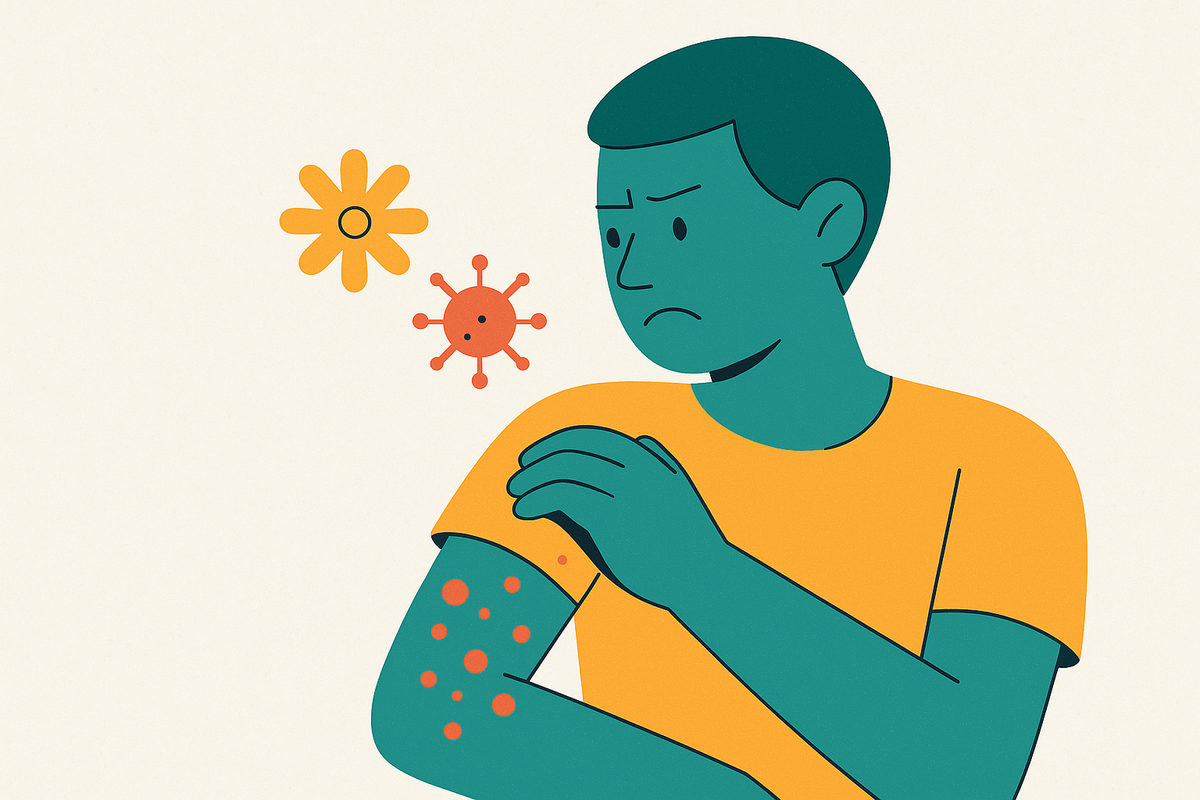
Skin symptoms further widen that picture. Direct contact with ragweed pollen can cause an itchy red rash within a day or two. The rash can blister and last a few weeks, so the effects of contact need not end when the exposure does. Hives are also a listed symptom.
Fatigue may be especially easy to misattribute because it does not announce its source as clearly as sneezing does. Congestion also has consequences beyond a blocked nose. Chronic nasal congestion pushes the body toward mouth breathing during sleep, which worsens snoring and can contribute to sleep disorders. It helps to check whether symptoms that seem separate occur at the same time of year. Looking only for sneezing can miss much of the burden of ragweed allergy.
How the immune system mistakes certain foods for ragweed pollen
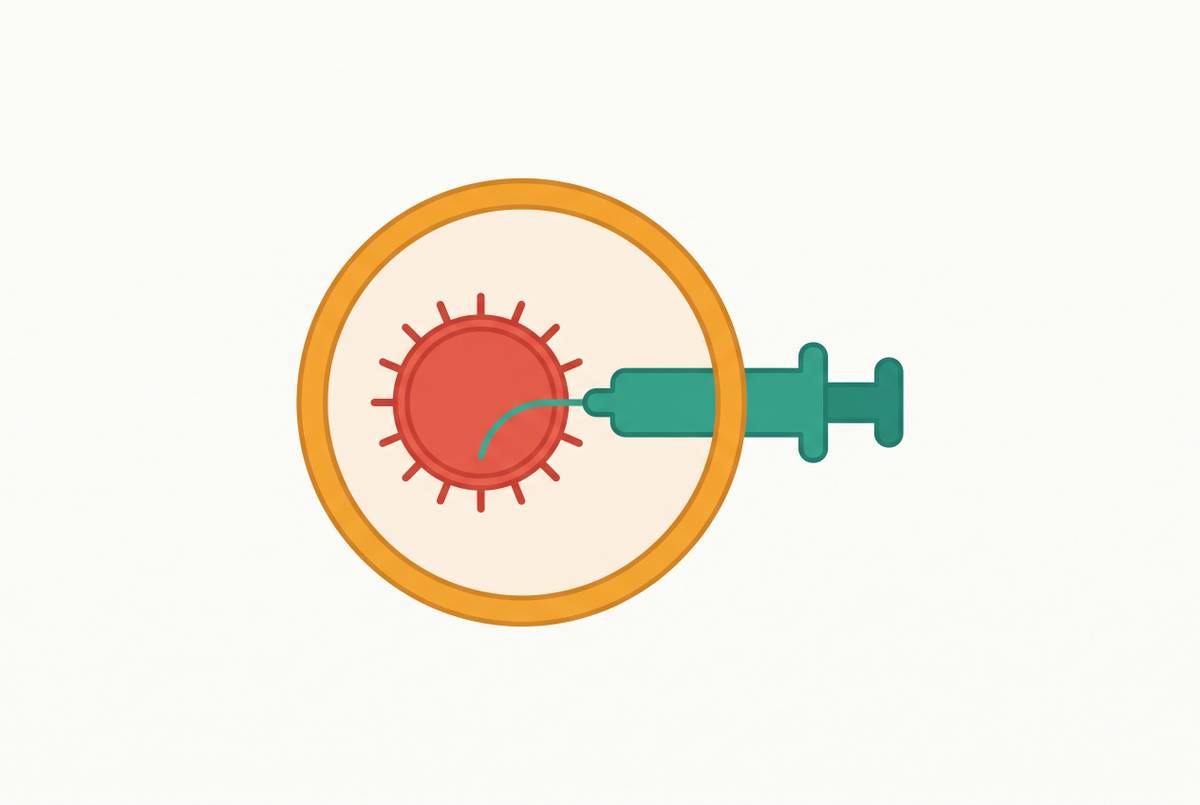
Oral allergy syndrome, or OAS, is also called pollen-food allergy syndrome. In ragweed-related OAS, the immune response to pollen reacts to certain food proteins because their structures are similar. Eagles Landing MC describes this as the immune system treating those proteins as the same threat.
The link depends on antibodies called IgE. Antibodies produced against ragweed pollen can bind to cross-reactive proteins in food and trigger symptoms in the mouth and throat. In a primary food allergy, by contrast, the food itself is the original sensitizer. That difference matters because the same broad description, a reaction after eating, can have different origins.
This mechanism also explains why a food may cause symptoms in one form but not another. The cross-reactive proteins are heat-labile, meaning that heat breaks them down. Cooking and digestion can disrupt their fragile structures, so a raw food may trigger OAS while its cooked version typically does not. Apple pie and a raw apple show how this works in OAS in general, though apple is outside the ragweed-specific food group. The contrast has a biological explanation, even if it first seems inconsistent.
The foods most likely to trigger reactions in ragweed-allergic people
The commonly recognized ragweed cross-reactive foods include bananas, cucumbers, zucchini, and melons. The melon group includes cantaloupe, honeydew, and watermelon. Becker ENT & Allergy and Eagles Landing MC identify these foods as potential triggers in ragweed-sensitive people. Their raw forms are the main concern for OAS because the relevant proteins have not been broken down by cooking.
Individual responses matter as much as the food names. Kids with Food Allergies explains that not every person with ragweed allergy reacts to every cross-reactive food. Symptoms can also intensify during peak ragweed season, when the immune system is already more reactive. The same food history may therefore look different during the seasonal peak.
The potential triggers extend beyond produce. Eagles Landing MC identifies chamomile and echinacea, commonly found in teas and supplements, as possible causes of oral allergy symptoms in ragweed-sensitive people. Juntendo University's 2022 study also found significantly elevated black pepper-specific and fennel-specific IgE levels in ragweed-sensitized mice compared with non-sensitized control mice. Those findings identify additional research candidates, but they do not establish that black pepper and fennel routinely cause OAS in people.
The distinction between OAS and a severe reaction must remain clear. OAS is usually mild and self-limiting. Anaphylaxis is a separate, severe reaction with systemic signs, including trouble breathing, throat swelling, a drop in blood pressure, and loss of consciousness. Becker ENT & Allergy states that anaphylaxis requires emergency care.
Why positive allergy test results for these foods can mislead without clinical context
Cross-reactivity creates a testing problem as well as a symptom pattern. A standard IgE test can show that the immune system recognizes a food protein without showing whether the food causes harm when eaten. Kids with Food Allergies explains that cross-reactive proteins can make a test result positive even when the food causes no symptoms. The distinction is especially important when several foods appear positive at once.
For example, a person with ragweed allergy may test positive to foods they have always eaten without trouble. The test can pick up the cross-reactive protein without establishing a clinically significant food allergy. Avoidance based only on that result may unnecessarily narrow the person's diet. The missing information is what happened when the food was actually eaten. Kids with Food Allergies emphasizes careful clinical history when interpreting test results.
At-home consumer kits can leave another gap. Many focus on foods and may not screen for the full range of environmental allergens, including ragweed pollen. They can therefore miss the sensitization driving OAS while also providing no way to interpret the cross-reactivity pattern.
Medical history and skin prick testing can help a provider make sense of patterns of sensitization beyond a count of positive results. A clinical history or food challenge also matters when judging whether avoidance is warranted.
Practical steps for managing OAS symptoms during ragweed season
Eagles Landing MC says people can usually eat cooked or canned forms of the raw foods that trigger their symptoms. The distinction applies to OAS and should not be treated as a blanket rule for a primary food allergy.
Peeling fruits and vegetables can also reduce exposure because the cross-reactive proteins are often concentrated in the skin. Symptoms can still occur after peeling fruits and vegetables. During the peak period from mid-August through October, especially around mid-September, it is especially helpful to avoid raw foods that cause symptoms. The focus is on foods that cause a reaction, rather than restricting every food associated with ragweed.
Chamomile and echinacea teas and supplements also deserve attention during that period. They can carry cross-reactive proteins and are worth avoiding during peak season when they are relevant triggers. Their herbal origin does not put them outside the pollen-food connection. Antihistamines can blunt mild OAS symptoms after they occur, but they do not prevent the underlying cross-reactive response.
These measures can make the season easier to manage, but their limit is important. Changing how a food is prepared or avoiding it reduces contact with the food trigger. It does not change the immune system's sensitization to ragweed, so the same food problems can come back with another ragweed season. Symptom management is useful, but it is not the same as changing the allergy driving those symptoms.
Why treating the ragweed allergy itself is the only way to address both sides of the picture
Because ragweed-related OAS is downstream of pollen sensitization, the most complete approach looks beyond food exposure. Antihistamines and nasal sprays can temporarily suppress seasonal symptoms, but they do not change the underlying sensitization. Allergen immunotherapy is the only treatment category described as potentially disease-modifying for IgE-mediated respiratory allergy, aiming to change the immune response to the allergen. That makes it the logical treatment category to consider when addressing the source of both seasonal symptoms and ragweed-related cross-reactivity.
Sublingual immunotherapy, or SLIT, delivers allergen under the tongue. It is absorbed through the oral mucosa, which has fewer mast cells than subcutaneous tissue, giving it a favorable safety profile relative to injections. The most common side effects are mild mouth or throat itching that typically diminishes within weeks. FDA-approved SLIT tablets are available for ragweed in the U.S. This is therefore a recognized treatment path for the pollen allergy at the center of the problem.
Clinical evidence shows that people have fewer symptoms and use less medication even after treatment ends. As tolerance to ragweed develops, the cross-reactive food responses that depend on that sensitization may also diminish. However, SLIT should not be presented as a cure or a guarantee that every food reaction will disappear. Its central value is the potential to modify the underlying respiratory allergy, with improvement in OAS a possible benefit.
Practical access also matters for a treatment taken over time. The first SLIT dose is supervised, and the doses after that are taken at home without weekly clinic visits. A telehealth-based approach can include a virtual consultation, at-home finger-prick testing, and a personalized treatment plan delivered to the door. In that setting, a provider uses testing as part of care, since a test alone does not give a diagnosis. Therapy plans starting at $99 /month, billed annually, make the cost clear and can be paid for with FSA/HSA funds.
Food precautions and symptom medicines help manage the immediate effects of an allergy that can reach the nose, eyes, skin, sleep, and mouth. But when a food reaction grows out of ragweed sensitization, avoiding the food leaves that source untouched. Treating the ragweed allergy itself is the path aimed at changing the response behind both sides of the picture.